
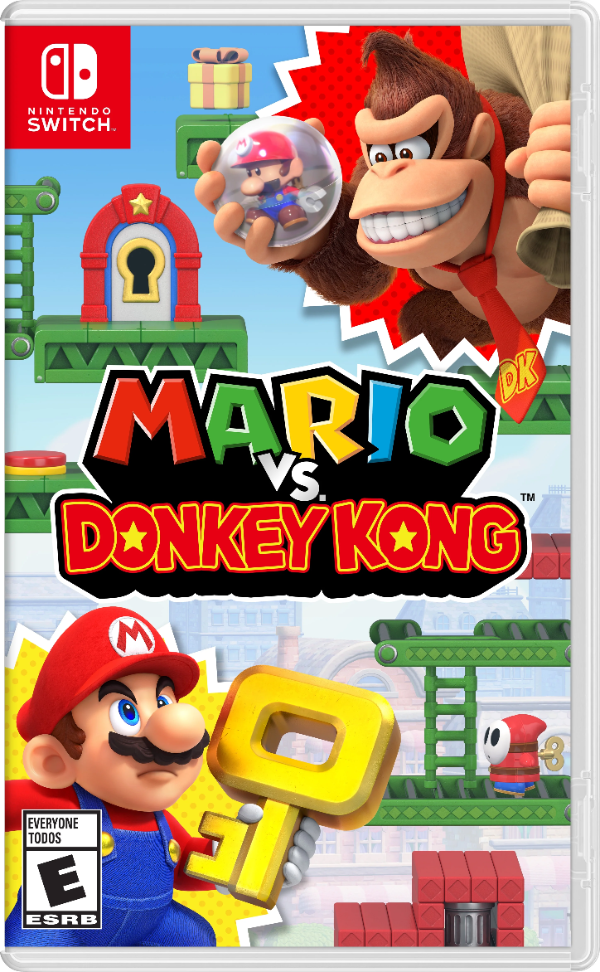
Mario vs. Donkey Kong
Overview

Mario vs. Donkey Kong (2024) is the Nintendo Switch HD remake of the 2004 Game Boy Advance puzzle-platformer of the same name. Released on 16 February 2024, it was developed by Nintendo in collaboration with Nintendo Software Technology (NST) — the same Redmond-based studio that created the original GBA game. The remake preserves the complete original 100-level GBA campaign while adding new content exclusive to the Switch version.
The game series traces its lineage back to the very first Donkey Kong arcade game (1981) — the iconic Mario vs DK rivalry that started in arcades was reimagined as a portable puzzle-platformer for the GBA in 2004, then expanded into a 6-game series across DS, 3DS, and Wii U. The 2024 Switch remake is the first new title in the Mario vs. Donkey Kong franchise in nearly a decade (since Mario vs. Donkey Kong: Tipping Stars on Wii U/3DS in 2015).
The Headline Features
- 130+ levels across 8 main worlds plus Expert post-game content — up from 100 in the GBA original.
- Two brand-new worlds exclusive to the Switch remake: Merry Mini-Land (toy-shop themed) and Slippery Summit (ice mountain themed).
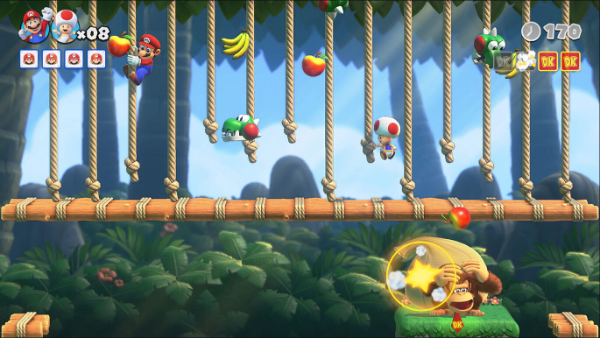
- 2-player local co-op with Mario + Toad — the headline new feature, never present in the GBA original.
- Casual Mode — a new accessibility-focused mode with more lives, more time, and helpful gameplay aids.
- Time Attack mode — dedicated speedrun timing with online leaderboards.
- HD visuals in modern Nintendo style, using the contemporary young Donkey Kong design (the new DK look from Super Mario Odyssey / Mario movie era).
- Fully refreshed musical score — the original GBA soundtrack rearranged with modern instrumentation, including the iconic “Mini-Mario March” cutscene music.
- Plus (+) Levels — each world’s 6 main levels also have “Plus” variants unlocked after collecting all Mini-Marios, mirroring the original GBA structure.
- Updated key & door mechanic — the core gameplay loop where Mario grabs a key, carries it to a locked door, then chases the Mini-Marios through a march-to-goal segment.
- Boss confrontations with Donkey Kong at the end of every world (8 boss fights, plus DK’s final showdown).
- Online leaderboards for Time Attack runs and Plus-level completion.
Franchise History
The Mario vs. Donkey Kong franchise spans over 20 years of Nintendo history, starting with the 2004 GBA original and continuing across multiple platforms.
Series History at a Glance
- 1981: Donkey Kong arcade — the original Mario (then “Jumpman”) vs Donkey Kong rivalry begins.
- 1994: Donkey Kong (Game Boy) — a Game Boy entry that introduced the “key collect” puzzle-platformer mechanic that would later define Mario vs. DK.
- 2004: Mario vs. Donkey Kong (GBA) — the franchise-naming first entry, developed by Nintendo Software Technology. Established the Mini-Mario toy concept.
- 2006: Mario vs. Donkey Kong 2: March of the Minis (DS) — first sequel, introduced direct Mini-Mario control via touch screen.
- 2009: Mario vs. Donkey Kong: Minis March Again! (DSiWare) — downloadable expansion.
- 2010: Mario vs. Donkey Kong: Mini-Land Mayhem! (DS) — third sequel.
- 2013: Mario and Donkey Kong: Minis on the Move (3DS eShop) — eShop entry.
- 2015: Mario vs. Donkey Kong: Tipping Stars (Wii U + 3DS) — last entry until 2024.
- 2024: Mario vs. Donkey Kong (Switch) — HD remake of the 2004 original. Nearly a decade since the last new entry.
The 2024 Switch Remake Context
The Switch remake was announced at the September 14, 2023 Nintendo Direct with a surprise reveal that delighted fans of the long-dormant franchise. The 4-month development-to-release window (announcement to launch) suggested Nintendo had been working on the project quietly for some time. Release timing positioned it as a Switch portable-puzzle title for the post-holiday lull and Mario Day (March 10) marketing window.
Developer: Nintendo Software Technology (NST)
Nintendo Software Technology is Nintendo’s Redmond, Washington-based US studio. NST developed the original 2004 GBA Mario vs. Donkey Kong, making the 2024 Switch remake essentially a 20-year-anniversary project by the same studio that created the original. NST has historically focused on quirky puzzle and platform titles — they also developed the GBA / DS Mario vs. DK sequels, Crosswords titles, and various Pokemon-adjacent games.
Story

The Mini-Mario Heist
The game’s story is told through animated cutscenes between worlds, presenting one of Mario’s simplest but most charming setups. The premise:
Donkey Kong sees a TV commercial advertising the brand-new Mini-Mario wind-up toys manufactured by the Mario Toy Company. The miniature toy Marios are the hottest new product, and DK becomes obsessed with owning them. He races to the store — only to find they’re sold out. Frustrated and rejected by the empty shelves, DK doesn’t accept defeat. Instead, he charges directly to the source: the Mario Toy Company factory itself.
DK breaks into the factory, grabs an enormous bag, and starts stealing all the Mini-Marios from the production line. Mario, who appears to be either the factory’s owner, manager, or chief inventor, witnesses the theft and immediately begins chasing DK. The chase takes them through all 8 themed worlds of the game — from the Toy Company’s own jungle warehouses to fire mountains, spooky houses, mystic forests, and (in the Switch remake) merry toy-lands and slippery summits.
The Chase Structure
Each of the 8 worlds ends with a confrontation with DK, but he always escapes with more Mini-Marios to the next world. The story builds toward a final showdown where Mario reclaims all his stolen toys. The story is told entirely through silent character-animated cutscenes — no dialogue, just expressive Donkey Kong and Mario animations that make the comedic chase universally accessible.
Characters
Mario vs. Donkey Kong has a focused 4-character cast (5 if you count the Mini-Marios as a group entity). The character roster reflects the puzzle-platformer focus rather than the sprawling ensembles of mainline Mario games.

Mario
Player 1Owner/inventor of the Mario Toy Company. Chases DK through 8 worlds to recover stolen Mini-Marios.

Donkey Kong
AntagonistSteals all the Mini-Mario toys after the store sells out. Boss at end of every world.

Mini-Marios
Rescue TargetsWind-up tin toys that march to the goal. Must be guided safely each level.

Toad
Co-op P2 (NEW)Switch remake exclusive co-op partner. Plays alongside Mario in 2P mode.
The 2024 New DK Design
The 2024 remake uses the contemporary “young Donkey Kong” design — the more cartoonish, expressive DK seen in Super Mario Odyssey, Mario Strikers: Battle League, and The Super Mario Bros. Movie. This is a significant visual update from the 2004 GBA original, which used the classic Donkey Kong Country-era design. The new DK has more expressive facial animations, exaggerated comedy, and visual charm appropriate for the lighter Mario vs. DK tone.


Mini-Marios
The Mini-Marios are the heart of the Mario vs. Donkey Kong concept. They’re wind-up tin toys manufactured by the Mario Toy Company — small mechanical figures shaped like Mario himself. They march in straight lines when wound up, climb ladders automatically, and follow Mario when he calls them.

The Mini-Mario Concept
Mini-Marios are wind-up mechanical toys shaped like Mario. They’re manufactured by the Mario Toy Company and feature throughout the franchise as the central rescue objective. In the 2024 remake, they retain all their classic characteristics: they march forward when activated, climb ladders, and follow Mario when called.
The Mini-Mario design has remained remarkably consistent across the 20-year franchise history — small, red-and-blue, with the iconic Mario “M” cap, expressive button eyes, and visible wind-up key on their backs. The 2024 remake updates the visuals to HD but preserves all the design elements that have made them iconic.
Mini-Mario Behaviors in Gameplay
- Auto-march — once wound up, Mini-Marios walk forward continuously until they hit an obstacle, fall off an edge, or reach the goal.
- Auto-ladder climb — Mini-Marios automatically climb up ladders they encounter on their march path.
- Follow Mario when called — when Mario presses the call button (during march levels), Mini-Marios change direction to follow him.
- Fragile to hazards — Mini-Marios are destroyed if they fall too far, get hit by enemies, or fall into pits/spikes.
- Star-rating system — the player’s star rating per level is based on how many Mini-Marios reach the goal safely.
- 3 Mini-Marios per Plus level — each “Plus” level requires guiding 3 Mini-Marios to the goal simultaneously, increasing difficulty.
- Mini-Mario goal scenes — once all 3 (or more) Mini-Marios reach the goal toybox, the level completes with a triumphant march animation.


Mario’s Moveset

An Acrobatic Mario, Not a Stomping Mario
Mario in Mario vs. Donkey Kong has a moveset distinct from mainline platformers. He cannot jump on enemies to defeat them (that’s the no-stomp restriction), so his moveset focuses on acrobatic traversal and object manipulation instead of combat. His repertoire includes specialized moves that don’t appear in 3D Mario games.
Mario’s Specialized Moveset
- Handstand — Mario can stand on his hands, making him shorter and able to traverse narrow gaps or low-ceiling tunnels.
- Rope sliding — Mario can grab ropes and slide along them. Critical for many puzzle solutions.
- Rope climbing — Mario can climb ropes vertically, accessing high platforms.
- Triple jump / high jump — Mario’s vertical jump is enhanced over standard 2D Mario for puzzle-platforming.
- Pick up and throw — Mario can grab objects (garbage cans, Shy Guy toys, Mini-Marios) and throw them for puzzle-solving.
- Swing — Mario can swing on bars and rope endings to reach distant platforms.
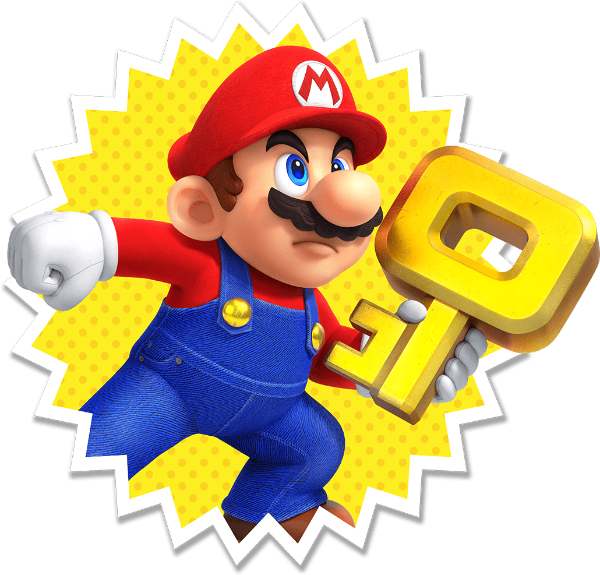
- Key carry — Mario carries keys above his head with reduced mobility (slower movement, no jumping).
- Hammer wield — with the Hammer power-up, Mario can swing the hammer to defeat enemies and break blocks.



Key & Door Mechanic
The defining gameplay loop in Mario vs. Donkey Kong is the “Key & Door” mechanic. Each level (except boss stages) is split into a two-part structure that combines a puzzle phase with a chase phase.
Part 1: The Key Phase
- Find the key — each level has a single key hidden somewhere in the stage. The player must explore to find it.
- Pick up the key — once found, Mario can grab the key above his head.
- Reduced mobility while carrying — with the key, Mario can’t jump. He must walk carefully through the rest of the stage.
- Carry to the locked door — the key must be carried (often through hazards) to a locked door elsewhere in the stage.
- Strategic decision-making — the key’s placement and the door’s placement force the player to plan a route through the stage.
Part 2: The Mini-Mario Phase
- Unlock the door — the key opens a door to the next part of the level.
- Find the Mini-Mario(s) — inside the unlocked area, one or more Mini-Mario wind-up toys await.
- Activate the Mini-Mario(s) — Mario activates them, and they begin marching toward the goal toybox.
- Guide them safely — Mario must navigate ahead of the Mini-Marios, clearing obstacles, defeating enemies, and managing hazards.
- Mini-Marios in toybox — once all Mini-Marios reach the toybox, the level is complete. Star rating based on count of safe arrivals.
Plus (+) Level Variant
After completing a world’s 6 main levels, the Plus (+) levels unlock — the same stages but with the Mini-Mario phase requiring multiple Mini-Marios to reach the goal simultaneously. Plus levels are significantly harder and reward completionist play.
Items & Power-Ups
Mario vs. Donkey Kong features a focused set of items, power-ups, and interactive objects — each serving specific puzzle-solving roles rather than general-purpose combat.
Power-Ups & Items

Hammer

Bubble Mario

Spring

Switch

Bob-omb

Garbage Can

Donut Block

Toy Box (Goal)

Wire Trap
Warp Boxes
Color-coded Warp Boxes teleport Mario (and Mini-Marios) between connected boxes of the same color. Critical for navigating complex stages.

Warp Box Red

Warp Box Yellow

Warp Box Blue
Item Functions
- Hammer — power-up that lets Mario swing the hammer to defeat enemies and break specific blocks. Temporary, time-limited usage.
- Bubble Mario — power-up encasing Mario in a protective bubble for stage-specific traversal.
- Spring — bouncy platform that launches Mario (or Mini-Marios) upward to higher platforms.
- Switch — toggleable platforms / hazards. Mario hits the switch to change stage geometry.
- Bob-omb — explosive enemy/item. Can be picked up and thrown to break walls or defeat enemies.
- Garbage Can — throwable container. Used to defeat enemies or solve weight puzzles.
- Donut Block — a platform that falls away after Mario stands on it briefly. Timing-critical puzzle element.
- Toy Box — the goal of every level’s Mini-Mario march phase. The box where Mini-Marios safely arrive.
- Wire Trap — a stage hazard that triggers when crossed. Damaging contact.
- Warp Boxes — colored teleporters (red/yellow/blue). Connected pairs warp Mario or Mini-Marios.
Enemies
Mario vs. Donkey Kong’s enemy roster combines classic Mario universe foes (Shy Guys, Bob-ombs) with original franchise enemies introduced in the GBA original.
Main Enemies

Bucket Man
MvDK Original

Monchee
MvDK Original

Mini Ninji
Classic

Mini Shy Guy
Classic
Sir Shovalot
MvDK Original

Snapjaw
MvDK Original
Enemy Mechanics
- Bucket Man — a metal-bucket-wearing enemy. Mario must work around his protective bucket to defeat him.
- Monchee — a monkey-like enemy throwing barrels (a Donkey Kong arcade callback!).
- Mini Ninji — small Ninji enemies that jump and dart through stages.
- Mini Shy Guy — the tiny version of Mario’s iconic masked enemy. Often encountered in the early worlds.
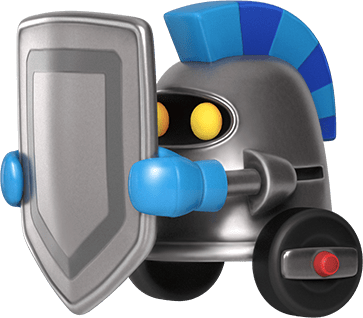
- Sir Shovalot — an armored knight enemy with a shovel. A puzzle obstacle as much as a threat.
- Snapjaw — a biting jaw-trap enemy that lurks in stage corners.
Combat Without Stomp
Critically, Mario in MvDK cannot stomp enemies to defeat them like in standard Mario games. Defeating enemies requires alternative methods:
- Hammer — the most direct attack option. Swing the hammer to defeat enemies in melee.
- Object throw — pick up garbage cans, Bob-ombs, or other throwables and hurl them at enemies.
- Backflip — Mario’s backflip can defeat some enemies in specific situations.
- Pickup & carry — some enemies (like Shy Guys) can be picked up and thrown.
- Stage hazards — luring enemies into pits, spikes, or other environmental hazards.
DK Boss Fights

DK as Boss at Every World’s End
Each of the 8 worlds in Mario vs. Donkey Kong ends with a boss fight against Donkey Kong himself. The boss fights are mechanically distinct from regular levels — they take place on a single-screen arena and involve throwing items at DK while dodging his attacks.
Boss Fight Mechanics
- Single-screen arena — unlike regular levels, boss fights happen in one contained vertical stage with platforms.
- DK at the top — Donkey Kong is positioned at the top of the screen, throwing barrels, bombs, or other projectiles at Mario.
- Mario at the bottom — Mario starts at the bottom and must climb up using ladders and platforms while dodging DK’s attacks.
- Throw objects at DK — Mario picks up items (often the very objects DK is throwing, or hammers, or Bob-ombs) and throws them back at DK to damage him.
- Multi-hit fights — most boss fights require multiple hits to defeat DK. Each hit makes DK throw faster, more aggressively.
- DK escape cutscene — once defeated, DK escapes to the next world with more Mini-Marios.
- Final boss — the 8th boss is the climactic showdown with no escape — Mario must defeat DK definitively to recover all the Mini-Marios.
Donkey Kong Boss Patterns
Each world’s boss fight features different DK behaviors:
- World 1 (Mario Toy Company) — throws barrels (classic Donkey Kong arcade callback).
- World 2 (Donkey Kong Jungle) — throws bananas and Bob-ombs.
- World 3 (Fire Mountain) — throws fireballs and uses heat-based attacks.
- World 4 (Spooky House) — uses ghost-themed projectiles.
- World 5 (Mystic Forest) — nature-themed attacks (leaves, branches).
- World 6 (Twilight City) — urban-themed attacks (debris, signs).
- World 7 (Merry Mini-Land NEW) — toy-themed attacks (Switch remake exclusive).
- World 8 (Slippery Summit NEW) — ice/snow attacks (Switch remake exclusive).
Level Structure
Mario vs. Donkey Kong has a deeply structured level design that’s consistent across all 8 worlds. Each world contains a predictable sequence of level types, creating familiarity while allowing thematic variety.
Per-World Level Sequence
- 6 Main Levels (1-1, 1-2, 1-3, 1-4, 1-5, 1-6) — the core puzzle stages. Each features the Key & Door + Mini-Mario March structure.
- 1 Mini-Mario Reunion Stage (1-MM) — a special stage where Mario must guide multiple Mini-Marios together to the goal. Often introduces new mechanics.
- 1 Boss Stage (1-DK) — the world’s climactic Donkey Kong boss fight.
- Total per world: 8 stages (6 main + 1 reunion + 1 boss).
- Plus (+) variants — after completing a world, each of the 6 main levels gets a “Plus” variant unlocked. These are harder versions of the same stages.
- Plus Plus (++) variants — the hardest variants, unlocked after completing all Plus levels. Endgame challenge content.
Demo Level Select Visual


Total Level Count
- 8 main worlds × 8 stages = 64 main stages
- + Plus variants of 48 levels = ~48 additional stages
- + Plus Plus variants (Expert) = ~24 endgame stages
- Total: 130+ levels of content, up from ~100 in the GBA original
8 Worlds Overview
Mario vs. Donkey Kong (2024) features 8 themed worlds. The first 6 are from the original 2004 GBA game; the final 2 (Merry Mini-Land + Slippery Summit) are new for the Switch remake.
World 1
Mario Toy Company
The starting world. The factory where DK begins his theft.

World 2
Donkey Kong Jungle
DK’s tropical home territory — dense jungle with vines and ropes.

World 3
Fire Mountain
Volcanic environments with lava hazards and heat-based puzzles.
World 4
Spooky House
Haunted mansion environments with ghosts and dark corridors.
World 5
Mystic Forest
Overgrown forest with mystical / fantasy theming.
World 6
Twilight City
Urban metropolis at sunset — the original GBA’s final world.

World 7 NEW
Merry Mini-Land
NEW Switch-exclusive toy-shop themed world. Bright, colorful, festive.
World 8 NEW
Slippery Summit
NEW Switch-exclusive ice mountain world. Slippery surfaces + cold theming.
Featured Worlds
Three worlds showcase Mario vs. DK’s level design variety: the original Mario Toy Company opener, the iconic Donkey Kong Jungle, and the new Merry Mini-Land Switch-exclusive world.
Mario Toy Company
The starting world is the Mario Toy Company factory itself — the very place where the Mini-Marios are manufactured. This is where DK’s theft begins, and the early stages double as tutorials for the game’s mechanics. The world introduces ladders, ropes, the key & door mechanic, and the basic Mini-Mario march. Visual style: industrial factory with conveyor belts, manufacturing equipment, and the bright Mario Toy Company branding everywhere.
Donkey Kong Jungle
DK’s home territory — a dense tropical jungle with vines, ropes, branches, and floor-level vegetation. This is where DK feels most powerful, and the boss fight here features classic Donkey Kong-arcade-style barrel throwing. The world’s visual style explicitly references the Donkey Kong Country franchise with jungle aesthetics, while the puzzle design uses rope-swinging and vine-climbing extensively. Many fans cite this as their favorite world for its strong franchise lineage callbacks.
Merry Mini-Land
The first brand-new world added for the Switch remake. Merry Mini-Land is a toy-shop themed world featuring festive, brightly-colored environments inspired by Mini-Mario branding and packaging. The puzzles introduce toy-themed mechanics like jack-in-the-box launchers and giant gift-box obstacles. Visually distinct from any GBA original world — the explicit purpose is to celebrate the Mini-Mario aesthetic at maximum saturation.
Expert + Plus Levels

The Plus and Plus Plus Variant System
After completing each of the 8 main worlds, the Plus (+) variant levels unlock. Plus levels are harder versions of the same 6 main stages from each world, featuring more demanding puzzles, more aggressive enemies, and stricter time / resource constraints.
Plus Level Differences
- Same stage layouts but with 3 Mini-Marios per level that all must reach the goal simultaneously.
- Enemies added/repositioned to create new challenge moments.
- Hazards expanded — more spikes, more moving platforms, less safe ground.
- Time pressure increased — Mini-Marios start marching sooner, demanding faster Mario navigation.
- New puzzle elements — some Plus levels introduce mechanical variants not in the main version.
Plus Plus (Expert) Levels
After completing all Plus levels in all 8 worlds, the Plus Plus (++) Expert Levels unlock as final endgame content. These are the hardest levels in the game, demanding mastery of every mechanic and creative puzzle-solving.
Switch Remake Features
The 2024 Switch remake adds substantial new content over the 2004 GBA original — the most significant remake-vs-original additions of any Mario vs. DK title.
Major Additions Summary
- 2 brand-new worlds — Merry Mini-Land (World 7) + Slippery Summit (World 8), bringing total worlds from 6 to 8.
- ~30 new levels across the 2 new worlds, raising total from 100 (GBA) to 130+.
- 2-Player local co-op — Mario + Toad, the headline new feature.
- Casual Mode — accessibility mode with more lives, more time, gameplay aids.
- Time Attack mode — dedicated speedrun timer with online leaderboards.
- Online leaderboards — compare Time Attack and Plus completion times globally.
- HD visuals — 1080p docked / 720p portable with modern character animations.
- Young Donkey Kong design — contemporary DK look from Super Mario Odyssey / Mario movie era.
- Refreshed soundtrack — GBA original music rearranged with modern instrumentation.
- New cutscene animations — full HD remade story cutscenes.
- New Mini-Mario animations — the wind-up march animations enhanced for HD presentation.
Switch-Specific Implementation
- Docked TV mode — plays at 1080p with full Joy-Con / Pro Controller support.
- Portable handheld — plays at 720p with touch-screen interaction options.
- Tabletop mode — ideal for 2P co-op with a single Joy-Con per player.
- HD Rumble — tactile feedback for key actions (key grabs, enemy hits, Mini-Mario arrivals).
- Save data cloud backup — via Nintendo Switch Online subscription.
New Worlds 2024 (NEW)
The 2024 Switch remake adds two completely new worlds not present in the 2004 GBA original. Together they bring the total world count from 6 to 8 and add approximately 30 new levels of content.
Merry Mini-Land
Merry Mini-Land is the first brand-new world added for the Switch remake. It’s a toy-shop themed festive environment featuring bright colors, gift boxes, jack-in-the-box launchers, ribbons, and Mini-Mario branding everywhere. The world celebrates the Mini-Mario aesthetic at maximum saturation — it feels like stepping into a Mini-Mario commercial.
Merry Mini-Land Mechanics
- Jack-in-the-box launchers — stage hazards/tools that launch characters upward when activated.
- Giant gift-box obstacles — wrapped present-themed barriers requiring puzzle-solving to bypass.
- Ribbon-rope mechanics — ropes themed as colorful ribbons, with branching pathways.
- Festive enemy variants — enemies dressed in holiday/celebration themes.
- New DK boss fight — a toy-themed boss arena.
Slippery Summit
Slippery Summit is the second brand-new world added for the Switch remake. It’s an ice mountain environment with slippery surfaces, snow, frozen platforms, and chilling visual style. As the 8th and final world, it serves as the climactic stage for Mario’s pursuit of DK.
Slippery Summit Mechanics
- Ice physics — surfaces are slippery; Mario and Mini-Marios slide farther than they should.
- Icy ramp launches — ice slides function as accelerating launchers.
- Cold enemy variants — frozen versions of standard enemies with unique behaviors.
- Snow obstacles — falling snow drifts and snow-piles as stage hazards.
- Final DK boss fight — the climactic confrontation that resolves the campaign.
2-Player Co-op (NEW)
The Switch Remake’s Headline Feature
2-Player Local Co-op is the Switch remake’s most-anticipated new feature. The original 2004 GBA Mario vs. DK was singleplayer-only; the 2024 Switch port introduces simultaneous co-op with Mario + Toad.
Co-op Mechanics
- Player 1 = Mario — the standard protagonist with the full moveset.
- Player 2 = Toad — the co-op partner. Same moveset as Mario.
- Both characters in the same stage — simultaneous play in the same diorama.
- Shared lives — a shared life pool. Either player’s death deducts from the pool.
- Shared collectibles — both players earn rewards collectively. Cooperation rewards both.
- Independent character control — each player moves their character independently. Splitting up is strategically valuable.
- Co-op-specific puzzles — some Plus levels have puzzles that require two characters to solve simultaneously (one holds switch while other activates door, etc.).
- Single Joy-Con per player setup — each player uses one Joy-Con. Standard tabletop / portable / docked setup.
- Local-only co-op — no online co-op. Both players must be on the same Switch.
Casual Mode (NEW)
Casual Mode is one of the Switch remake’s most-praised new features. It’s an accessibility-focused mode designed to make Mario vs. Donkey Kong approachable for younger players, casual gamers, and anyone who wants a less-stressful puzzle experience.
Casual Mode Features
- Unlimited lives — unlike Classic Mode’s limited life pool, Casual Mode never ends a level due to lives running out.
- Extended time limits — more generous timer per stage. Players can take their time exploring and planning.
- Lower difficulty on certain hazards — some hazards have reduced damage or slower attack patterns.
- Visual hint indicators — stage hints highlighting solution paths for stuck players.
- Skip-stage option — after multiple failed attempts, players can choose to skip a particularly frustrating stage and return later.
- Full content access — Casual Mode players can complete all 130+ stages, just with reduced challenge.
- Switchable on the fly — players can toggle between Classic and Casual modes at any time without losing progress.
Classic Mode (the Original GBA Experience)
For veterans and challenge-seekers, Classic Mode preserves the GBA original’s difficulty: limited lives, strict timer, full hazard damage. The default selection for most experienced players. The same 130+ levels work in either mode.
Visual Style

HD Modern Visual Direction
The 2024 Switch remake takes the 2004 GBA’s pixel-art aesthetic and translates it into modern HD presentation. The visual style is consistent with contemporary Mario games — the cartoonish, expressive Switch-era Mario universe look.
Visual Identity Elements
- Young Donkey Kong design — the contemporary DK look used in Super Mario Odyssey, Mario Strikers: Battle League, and The Super Mario Bros. Movie. More expressive than the 2004 DK Country-era design.
- HD Mini-Mario animations — the wind-up toy marches are now smoothly animated with mechanical visual flourishes (visible wind-up rotations, articulated joints).
- Toy-themed environmental detail — every stage emphasizes the Mario Toy Company branding via posters, packaging, manufacturing equipment.
- Vibrant color palette — each world has a distinct color identity (toy company yellow, jungle green, fire mountain red, etc.).
- HD Rumble integration — tactile feedback synced to key gameplay moments.
- 1080p docked / 720p portable — native HD presentation in both modes.
- Refreshed cutscene animations — the story cutscenes between worlds are fully HD remade, with new expressive DK and Mario animations.


Videos & Trailers
Four verified official Nintendo trailers covering Mario vs. Donkey Kong (Switch remake) from September 2023 reveal through February 2024 launch.
Reception & Legacy
Mario vs. Donkey Kong (Switch remake) launched on 16 February 2024 to generally positive reviews (Metacritic ~78), with strong commercial performance and broad audience appeal. The remake is widely regarded as a successful franchise revival.
Acclaim
- Faithful HD remake — universally praised for preserving the GBA original’s puzzle design while updating presentation.
- Two new worlds add real value — Merry Mini-Land + Slippery Summit’s ~30 levels of new content received special mention.
- 2-Player co-op transforms the experience — the most-praised single addition. Many reviewers noted that co-op alone justifies the purchase.
- Casual Mode is excellent accessibility — critics praised the thoughtful difficulty-scaling option that opens the game to younger players.
- Time Attack adds replay value — the speedrun mode with online leaderboards adds longevity.
- Charming HD visual presentation — the Mini-Mario animations particularly received praise.
- Refreshed soundtrack — the modern arrangements were well-received.
- Strong content value — 130+ levels for $50 USD is generous for a Nintendo remake.
- Series revival — fans of the long-dormant franchise universally welcomed the return.
Criticisms
- $50 USD pricing — some reviewers felt $50 was steep for a remake of a 20-year-old portable title, even with substantial new content.
- Lack of online co-op — the co-op mode is local-only. Some fans expected online co-op for a 2024 release.
- Young DK design polarizing — some fans missed the classic Donkey Kong Country-era DK design. The young DK look has its detractors.
- Some original GBA puzzles feel dated — a few original 2004 stages have puzzle solutions that feel obvious to modern players.
- Plus and Plus Plus levels can be brutally hard — the endgame difficulty curve is steep, even for veterans.
- Limited Donkey Kong character variety — DK is the only boss enemy across all 8 boss fights.
Sales & Legacy
- UK launch week #1 — topped the UK boxed charts in February 2024.
- Strong global commercial performance — the remake sold well enough to position Mario vs. DK as a viable ongoing Switch franchise.
- Franchise revival signal — the successful remake suggests Nintendo will continue investing in Mario vs. DK as a Switch and Switch 2 puzzle franchise.
- Renewed interest in older entries — spurred re-interest in the DS / 3DS / Wii U Mario vs. DK sequels.
- Set Toad up as recurring Mario vs. DK co-op partner — Toad’s playable role here likely sets up future appearances in the franchise.
Reference / Information
Related coverage on Super Luigi Bros.