
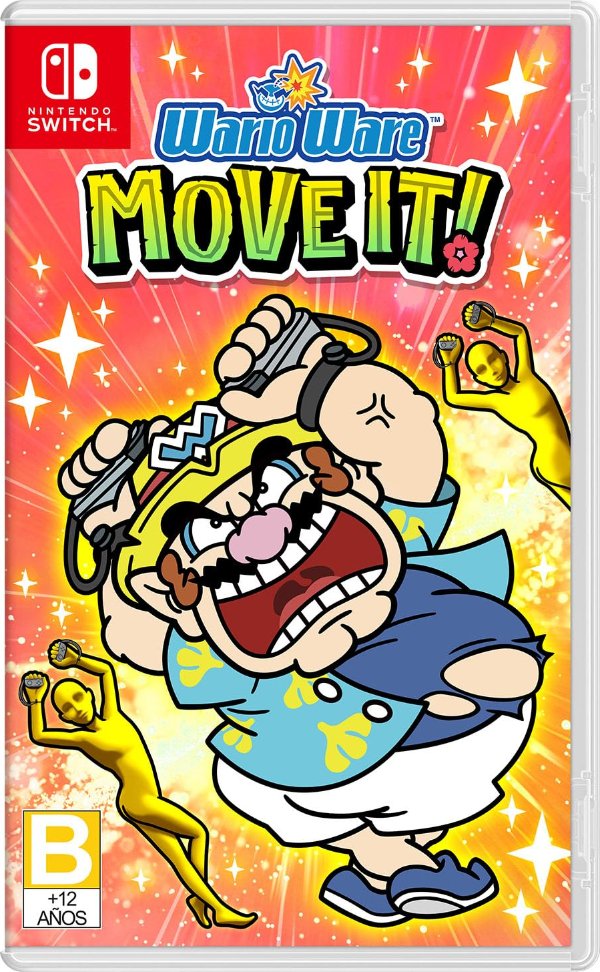
WarioWare: Move It!
Overview

WarioWare: Move It! is the eighth main entry in the Nintendo / Intelligent Systems WarioWare microgame franchise and a return to the franchise’s motion-control roots. Released on 3 November 2023 as a Nintendo Switch exclusive, the game is the spiritual successor to 2006’s WarioWare: Smooth Moves (Wii), updating that game’s motion-microgame template for the dual-Joy-Con Switch era.
Where its immediate predecessor WarioWare: Get It Together! (2021) made the cast playable, Move It! returns to motion-controlled microgames where each microgame is played using a specific Joy-Con pose called a “Form.” The game features 18 distinct Forms — each requiring the player to hold the Joy-Cons in a specific physical position (train pistons for “Choo Choo”, arms-raised for “Big Cheese”, boxing stance for “Mighty”, etc.). Microgames are designed around motion gestures specific to each Form, creating maximum physical-comedy chaos.
The Headline Features
- 18 Forms (Joy-Con motion poses) — Choo Choo, Big Cheese, The Sphinx, Knight, Ball Player, Mortar, Mighty, Skater, Toddler, Spinner, Mermaid, Tightrope, Sneak, Tank, Above the Clouds, Express Delivery, Massage, Pump-Up.
- 200+ motion-controlled microgames — every microgame uses motion input. The franchise’s signature lightning-fast pace (4-5 seconds per microgame) wrapped in physical-comedy gameplay.
- Caresaway Island story setting — Wario and friends vacation on a tropical island that turns out to harbor a mysterious power. New NPC King Caresaway The First introduced.
- The full 18-character WarioWare cast returns — Wario, Mona, Jimmy T, Ashley, Red, Orbulon, 9-Volt, 18-Volt, 5-Volt, Kat & Ana, Dribble & Spitz, Penny, Dr. Crygor, Mike, Young Cricket, Master Mantis, Lulu, Pyoro. All return with new character art.
- 2-player co-op throughout Story Mode — every microgame is playable with two players simultaneously, each with their own Joy-Con.
- Multiplayer Party Mode — 4 dedicated party stages: Sugoroku (board game), Commander (Simon Says-style), Statues (motion-freeze), Battle Four (4-player competitive).
- Spiritual successor to Smooth Moves (Wii 2006) — the franchise returns to its motion-control identity after the playable-cast detour of Get It Together!
- Goro Abe directing — the 20+ year WarioWare franchise veteran continues his stewardship.
Franchise Context
WarioWare: Move It! continues the franchise’s tradition of mechanical reinvention. Each major WarioWare entry has introduced a new input method or design pillar, and Move It! is no exception — it returns to motion control after a 17-year gap from Smooth Moves.
Where Move It! Fits
- WarioWare, Inc.: Mega Microgames! (GBA, 2003) — single-button.
- WarioWare: Touched! (DS, 2004) — stylus.
- WarioWare: Twisted! (GBA, 2004/05) — gyroscope tilt.
- WarioWare: Smooth Moves (Wii, 2006) — Wii Remote motion. The direct predecessor to Move It!
- WarioWare: Snapped! (DSiWare, 2008) — camera.
- WarioWare: D.I.Y. (DS, 2009) — player-created microgames.
- WarioWare Gold (3DS, 2018) — retrospective compilation.
- WarioWare: Get It Together! (Switch, 2021) — playable cast.
- WarioWare: Move It! (Switch, 2023) — return to motion-control. This game.
Move It! vs Smooth Moves
The franchise has come full circle. Smooth Moves introduced “Forms” via the Wii Remote’s motion-sensor capability — the player held the Remote in specific positions (“The Remote Control”, “The Umbrella”, “The Mohawk”) and reacted to microgame prompts. Move It! updates this concept for the Switch’s dual-Joy-Con setup, with each Form now requiring both Joy-Cons in coordinated poses (Choo Choo needs both arms as train pistons; Tightrope needs arms outstretched for balance).
The Two-Year Cadence
Move It!’s release came just 2 years after Get It Together! — the shortest gap between two mainline WarioWare titles in franchise history. This signals Nintendo’s confidence in the franchise during the Switch era, treating WarioWare as a regular Switch-lifecycle release rather than a once-per-generation event.
Story

Story Setup
The story opens with Wario watching a TV commercial promoting Caresaway Island — a tropical vacation paradise advertised as the perfect getaway. The commercial promises endless relaxation, delicious parfaits, and luxurious experiences. Wario, perpetually scheming for free anything, immediately decides to book himself and the entire WarioWare crew for an all-expenses-paid trip (paid for, of course, by Wario’s questionable accounting).
Upon arriving at Caresaway Island, the heroes are greeted by King Caresaway The First, the eccentric ruler of the island. The king is enthusiastic and welcoming, but something seems off — the island contains strange magical artifacts, the parfaits have mysterious effects, and the locals appear to be under a curious spell. As Wario and friends explore the island, they discover the king’s vacation paradise has a deeper, more chaotic side.
The Heroes’ Vacation Becomes an Adventure
Each of the 18 WarioWare cast members brings their own vacation activities and adventures to the island. Their stories play out as themed microgame stages, with each character’s segment revealing more about Caresaway Island’s secrets. The campaign’s lighter tone (a vacation rather than a glitched console crisis) gives Move It! a more relaxed, joyful narrative atmosphere than Get It Together!’s darker corruption story.
Caresaway Island
Caresaway Island is the entire setting of Move It! — a tropical vacation paradise that becomes the backdrop for all 200+ microgames. The island is presented as a luxurious getaway, but its strange phenomena drive the campaign’s story arc.
Island Setting


Island Features
- Tropical beaches — the island’s signature attraction. Sun, sand, surf, palm trees throughout the visual environment.
- The Caresaway Parfait — a legendary tropical dessert. Featured in multiple microgames and story beats. The island’s defining culinary export.
- The Caresaway Grand Prix — the island’s premier racing event. Features prominently in sports-themed microgames.
- Magical artifacts scattered across the island — small mysterious objects that the king collects and that drive the story’s magical-island angle.
- The king’s palace — the central hub where King Caresaway holds court and orchestrates the island’s activities.
- Tourist amenities — hotels, restaurants, shops, and attractions that serve as microgame backdrops.
- Local Caresawayan inhabitants — island citizens who appear in microgames as NPCs.
King Caresaway

The Eccentric Ruler
King Caresaway The First is the eccentric ruler of Caresaway Island and the campaign’s central NPC. He is the host of the heroes’ vacation, the orchestrator of the island’s activities, and — as the story reveals — the holder of the magical secrets that drive the campaign’s lighter mystery arc.
Character Design
- Royal aesthetic — crown, royal regalia, exaggerated proportions. Designed in the franchise’s anime-influenced 3D style.
- Eccentric personality — perpetually enthusiastic, over-the-top friendly, slightly suspicious. The “wait, is this guy actually okay?” energy.
- Tropical island ruler — leans heavily into the island’s tropical aesthetic. His attire combines crown-and-robes with summer vacation wear.
- Magical-artifact collector — the story’s mystery hinge. The king has accumulated unusual magical objects across the island over his rule.
His Role in the Campaign
King Caresaway introduces each new gameplay section, presents microgame challenges, and serves as the narrative bridge between cast member stages. Unlike Get It Together!’s 13-Amp antagonist, King Caresaway is a more ambiguous figure — not clearly a villain, but with secrets that the heroes gradually uncover. His character arc resolves with reveals about the magical artifacts and the island’s true nature.
The Forms Motion System
The Forms system is Move It!’s defining mechanic. Each of the 18 motion poses requires the player to hold the Joy-Cons in a specific physical position, with each microgame designed around the gesture vocabulary of a specific Form.
How Forms Work
- Hold both Joy-Cons in a specific position — e.g. Choo Choo holds both controllers in front like train wheels; Big Cheese holds arms raised overhead; Mighty positions controllers in boxing stance.
- Each Form has dedicated microgames — every Form has its own pool of microgames designed around the gesture vocabulary that pose enables.
- Same-microgame variations across Forms — some microgames have variants for multiple Forms, requiring different motion responses to the same prompt.
- Sequential Form switching — Story Mode sequences chain multiple Forms together, with the game prompting “Now hold Choo Choo” → “Now switch to Sphinx” → etc.
- Calibration phase — before each Form sequence, the game prompts a quick calibration to ensure motion accuracy.
The 18 Forms Overview
- Choo Choo — both Joy-Cons held like train pistons. Wario’s signature Form.
- Big Cheese — arms raised overhead. Cheering / triumphant pose.
- The Sphinx — arms crossed over chest in regal stance.
- Knight — holding both controllers like a sword grip.
- Ball Player — ball-throwing or batting motion.
- Express Delivery — carrying a package motion.
- Massage — hands-pressing-on-something gesture.
- Pump-Up — weightlifting / pump-up motion.
- The Mortar — grinding / pounding motion.
- The Mighty — boxing stance.
- The Skater — horizontal balance / ice-skating motion.
- The Toddler — unsteady walking / wobble motion.
- The Spinner — rotating / spinning motion.
- The Mermaid — swim-stroke / fin-flap motion.
- The Tightrope — arms outstretched balance pose.
- The Sneak — tip-toe / stealth pose.
- The Tank — heavy-stance / military pose.
- Above the Clouds — arms raised in floating / weightless pose.
Featured Forms
Seven featured Forms from the 18-Form roster — the iconic poses that define Move It!’s motion-control identity and appear in promotional materials.

Choo Choo
FormBoth Joy-Cons as train pistons. Wario’s signature Form.

Big Cheese
FormArms raised overhead in triumphant cheering pose.

Locomotive
FormBoth arms forward in train-motion gesture.

Hands Up
FormBoth arms raised vertically in surrender / submit pose.

Rope Climb
FormPulling motion as if climbing a rope hand over hand.

Ride Bike
FormPedaling / cycling motion with both Joy-Cons.

Power Pose
FormBoth arms raised in triumphant power-pose stance.
18-Character Cast
The full 18-character WarioWare cast returns in Move It! — the same ensemble as Get It Together! (minus the unlockable 13-Amp). Every returning character gets new vacation-themed artwork reflecting the tropical Caresaway Island setting.
The 18 Returning Characters

Wario
ReturningThe vacation organizer + scheme architect

Mona
ReturningSurfing pizza-delivery girl on vacation

Jimmy T
ReturningDisco-king relaxing in tropical paradise

Ashley & Red
ReturningGoth witch + demon companion (paired card)

Orbulon
ReturningUFO researcher on tropical investigation

9-Volt / 18-Volt / 5-Volt
ReturningThe Volt family trio (paired card)

Kat & Ana
ReturningNinja twin sisters on island assignment

Dribble & Spitz
ReturningTaxi duo providing island transportation

Dr. Crygor / Penny / Mike
ReturningThe Crygor trio (paired card)

Young Cricket & Master Mantis
ReturningMartial arts duo training on the island
Notable Individual Artworks


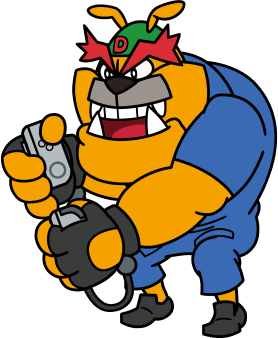


Featured: Wario

Wario — Choo Choo Form Master
Wario is the campaign’s opening protagonist and his signature Form is Choo Choo — both Joy-Cons held as train pistons. The Choo Choo Form is the first one players learn, making Wario the natural entry-point character into Move It!’s motion system.
The Choo Choo Form
- Both arms forward as train-piston rods — alternating left-right pumping motion.
- The signature Wario Form — Wario’s greedy, hardworking persona embodied in train-engineer motions.
- Tutorial-friendly — simple alternating motion. New players succeed within their first session.
- Featured in nearly every Move It! promotional video — the Choo Choo pose is the franchise’s most-promoted visual.
Wario’s Vacation Setup
Wario watches the Caresaway Island TV commercial and immediately decides to book the entire WarioWare crew for a free vacation. His scheming-tycoon persona pairs perfectly with the trip’s setup — he’s the impulsive ringleader who decides the cast will all vacation together, then the campaign unfolds from there.

Featured: Ashley & Red

Ashley & Red — The Goth Duo Returns
Ashley returns with her demon companion Red. After Get It Together! elevated Ashley to franchise mainstream fan-favorite status, Move It! gives her a paired Title Card with Red — a recognition of the duo’s narrative importance and visual chemistry.
Forms Featured
- Multiple Forms across her microgames — Ashley’s segment uses several Forms including The Sphinx (regal arms-crossed) and Above the Clouds (mystical floating).
- Spell-casting motion microgames — her segments feature magic-themed games requiring waving and pointing gestures.
- Red’s appearances — her demon companion appears in cutscenes and select microgame segments.
Cultural Status Continues
Ashley remains the franchise’s most-discussed character among fan communities. Her Move It! appearance — with Red as a paired character — reinforces her cultural status. Fan art volume for Ashley remains the highest of any WarioWare character.


Featured: Cult Favorites
Beyond Wario and Ashley, several recurring WarioWare characters get notable Move It! moments. The tropical-vacation framing lets the cast members each have their own beach activities and microgame themes.
The Volts Trio — 9-Volt / 18-Volt / 5-Volt
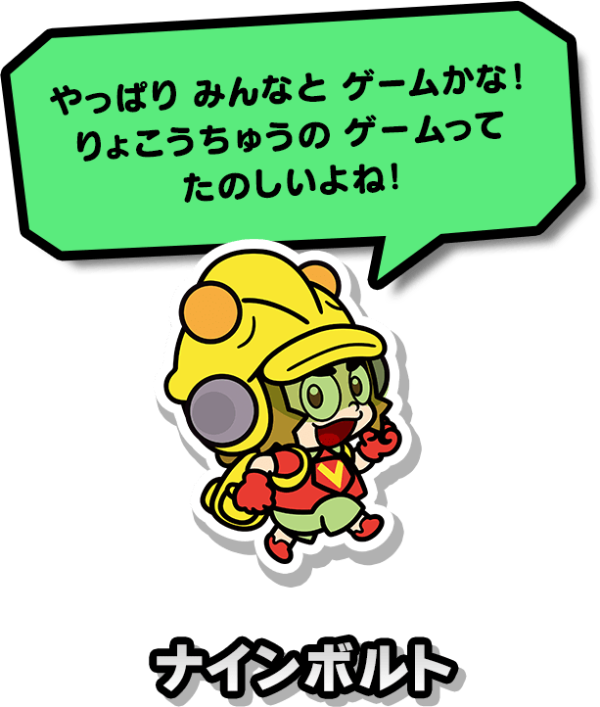


The 9-Volt / 18-Volt / 5-Volt trio (the Volts family) get a paired Title Card showcasing them together. They appear throughout the campaign with vacation activities and retro-Nintendo-themed microgames.
Cricket & Mantis Pair


The Young Cricket and Master Mantis duo (martial arts sensei + student) get a paired Title Card. Their segments focus on physical-martial-arts microgames that pair naturally with Move It!’s motion-control identity.
The Crygor / Penny / Mike Trio


Dr. Crygor + granddaughter Penny + karaoke-robot Mike form the third paired Title Card trio. Their segments mix scientific gadgetry with karaoke/performance microgames.
200+ Microgames
Move It! delivers 200+ motion-controlled microgames across its Story Mode and party modes. Each microgame is designed around the gesture vocabulary of a specific Form, creating physical-comedy gameplay throughout.
Microgame Sample Gallery

Prison Break

Train Chase

Diving

Tissue

Swing

Sushi

Fishing

Metroid Dread
Microgame Categories
- Character-themed — each WarioWare cast member has their own pool of themed microgames (Mona’s pizza delivery, Ashley’s magic, 9-Volt’s Nintendo nostalgia, etc.).
- Island activities — swimming, fishing, sandcastle building, surfing, vacation-themed games tied to Caresaway Island.
- Sports microgames — racing, baseball, sword-fighting, etc.
- Nintendo references — microgames featuring callbacks to Metroid Dread, Mario, Zelda, and other franchise icons.
- Surreal / absurd microgames — the franchise’s signature weird-Wario humor (Tissue removal, etc.).
Microgame Mechanics
- 4–5 second time limit per microgame — the franchise’s signature pace.
- Form-specific gesture inputs — each microgame uses the specific Form’s motion vocabulary. Choo Choo microgames need piston-arms; Mighty microgames need boxing-punches.
- Lose 4 lives, game over — each failed microgame costs a life.
- Boss microgames every 5–7 rounds — longer (15-30 second) special microgames that test multiple gestures in sequence.
- Increasing speed/difficulty waves — the longer you survive, the faster microgames run.
Story Mode Stages
Story Mode in Move It! is structured as a unified Caresaway Island campaign. Each of the 18 cast members brings their own vacation activities and themed microgame stages, all set on the same island.
The Story Stage Structure
- Wario’s opening segment — the campaign’s introduction. Wario books the trip and the heroes arrive. Choo Choo Form tutorial.
- King Caresaway’s welcome — the king greets the heroes and orchestrates initial island activities.
- 18 character-themed segments — each WarioWare cast member gets their own themed microgame collection set in Caresaway locations.
- Story revelations between segments — the king’s magical artifacts and the island’s secrets gradually emerge through cutscenes.
- Final encounter — the campaign culminates in a multi-Form final microgame sequence revealing the king’s true identity / nature.
Featured Story Visuals


Party Mode Overview
Move It!’s Party Mode features 4 dedicated multiplayer stages designed for 2-4 player local play. Each Party Stage uses the Forms motion system in different competitive or co-operative formats.
Multiplayer Foundation
- 2-4 player local multiplayer — every Party Mode supports 2-4 players using individual Joy-Cons or paired controllers.
- Single Joy-Con per player — perfect for the Switch’s included controller setup. No additional controller purchases required for 4-player play.
- Forms-system based — all Party Stages incorporate the motion-control Forms system. Multiplayer is built around physical poses rather than button-mashing.
- 4 distinct Party Stages — Sugoroku (board game), Commander (Simon Says), Statues (motion-freeze), Battle Four (4-player competitive).
- Designed for party context — the Party Stages are explicitly designed for family / friend-group play with the social comedy of motion gestures front and center.
Party Stages
The 4 dedicated Party Stages each provide a different multiplayer format — board game, reaction challenge, motion-freeze comedy, and 4-player competitive.
Sugoroku

A traditional Japanese-style board game where players roll dice and move pieces, with motion-gesture microgames between turns determining bonuses and penalties.
Commander

The Commander barks out Form-pose commands (“Choo Choo!” “Big Cheese!” “Sphinx!”). Players must quickly assume the matching pose. Mistakes are eliminated. The motion-control Simon Says variant.
Statues

Players move and pose freely — until the music stops, when everyone must freeze in their current Form. The Commander judges whose pose is best. Comedy through awkward-frozen-pose chaos.
Battle Four

The premier 4-player competitive mode. Four players cycle through motion-microgames competing for points across multiple rounds. The “settler” Party Stage — if you only have time for one Party Mode game, this is the headliner.
Visual Style
The Tropical-Vacation Visual Identity
Move It! introduces a distinct visual identity from Get It Together!’s color-saturated chaos. The tropical Caresaway Island setting drives a sunnier, beachier color palette throughout the game:
- Tropical color palette — cyans, corals, golden yellows, palm greens dominate. A deliberate “summer vacation” visual signature.
- Beach and island environments — sun-drenched beaches, palm trees, tropical wildlife, ocean horizons throughout microgame backgrounds.
- Caresaway aesthetic — the king’s palace, the Grand Prix track, the parfait shops all share a unified tropical-paradise visual identity.
- 3D anime-influenced character models — the franchise’s signature character art style continues, with vacation-themed costume updates.
- 1080p Switch presentation — runs at 1080p docked, 720p portable, with consistent 60fps performance.
- Animated cutscenes between segments — character vignettes and king interactions get hand-drawn animation treatment.
Soundtrack
Sound Design & Music
Move It!’s soundtrack leans into tropical and vacation-themed music — a deliberate departure from the eclectic chaos of previous WarioWare entries.
- Tropical-themed background music — steel drums, ukuleles, surf-rock guitar, and tropical-pop instrumentation throughout.
- King Caresaway’s royal theme — a memorable recurring leitmotif. Plays during palace interactions and reveals.
- Form-specific audio cues — each Form has distinct audio prompts. “Now switch to Choo Choo” plays with chugging train sounds, etc.
- Microgame audio cues — each microgame has signature 1-3 second sound effects for success or failure.
- Character voice clips — each WarioWare cast member has voice-acting for victories, defeats, and reactions. Ashley’s voice work remains fan-favorite.
- Composer team — Nintendo’s in-house composers under the long-time WarioWare music direction team.
Development
Development
WarioWare: Move It! was developed by Intelligent Systems with returning director Goro Abe. The game came just 2 years after Get It Together! — the franchise’s shortest gap between mainline releases, reflecting Nintendo’s confidence in WarioWare during the Switch era.
Returning to Smooth Moves
Director Abe reportedly pitched the return to motion control as a way to recapture Smooth Moves’ party-game energy on Switch. The Joy-Con’s dual-controller setup made the franchise’s motion concept feasible without requiring additional hardware (Wii Remote, etc.), and the game’s simultaneous local multiplayer appeal aligned with Switch’s “play anywhere with anyone” identity.
Development Timeline
- 2021–2022 — early concept after Get It Together!’s launch. Motion-control direction confirmed.
- 2022–2023 — full production. 18 Forms designed and balanced. 200+ motion-microgames created.
- June 2023 — announcement at Nintendo Direct (21 June 2023).
- November 3, 2023 — worldwide release.
Videos & Trailers
Four verified official Nintendo trailers covering Move It! from Nintendo Direct announcement through launch.
Reception
WarioWare: Move It! launched on 3 November 2023 to generally positive reviews — Metacritic ~80, IGN 8/10, Game Informer 8/10, Nintendo Life 8/10, GameSpot 8/10, Eurogamer “Recommended.”
Acclaim
- Return to motion control feels right — critics universally welcomed the franchise’s return to its Smooth Moves identity. The Joy-Con motion system feels natural for WarioWare’s pacing.
- 18 Forms create real variety — the Forms system gives the game genuine mechanical depth across microgames.
- Caresaway Island unified setting — the single-island narrative framing is praised as more cohesive than Get It Together!’s console-glitch story.
- King Caresaway as central NPC — the new character provides a strong narrative anchor.
- Party Mode multiplayer — the 4 Party Stages received praise as some of the best WarioWare multiplayer ever.
- 200+ motion microgames — the franchise’s value-for-money microgame count is preserved.
- The Volts trio + Cricket-Mantis + Crygor-Penny-Mike paired Title Cards — ensemble character chemistry is well-respected.
- Improves on Get It Together! — several reviewers found Move It! a more refined and confident WarioWare experience.
Criticisms
- Motion-control accuracy varies — some Forms (especially complex multi-Joy-Con poses) suffer from occasional misreads.
- Calibration phases interrupt flow — the pre-Form calibration adds friction between microgames.
- Short campaign length — ~4-6 hours for Story Mode, in line with franchise norms but reviewers noted lower replay-value per Form.
- Not a major step-forward from Smooth Moves — some traditionalist fans found Move It! too close to its 2006 predecessor without enough mechanical innovation.
- Limited online features — unlike Get It Together!’s Wario Cup, Move It! has minimal online presence. Multiplayer is local-only.
Sales & Legacy
Sales Performance
- Launch week (Nov 2023) — strong UK and US debut, top 10 in both markets. Japanese launch ~25k week one.
- End of 2023 — estimated ~1 million copies in first 2 months.
- Lifetime estimate — around 1.5-2 million copies, comparable to Get It Together!’s lifetime.
- Late-Switch lifecycle context — the November 2023 launch came during a quieter Switch period, helping sales visibility.
Legacy
- The motion-control return — confirms the franchise’s commitment to mechanical variety. Future WarioWare entries can mix-and-match input methods.
- The 2-year cadence — demonstrates Nintendo’s confidence in WarioWare as a regular Switch-era release.
- Goro Abe’s continued leadership — Abe remained the franchise director, suggesting sustained creative direction into future titles.
- King Caresaway as franchise addition — the new character joins the WarioWare extended-universe.
- The tropical-vacation setting — establishes a template for “themed setting” WarioWare titles that future entries could follow.
- Pair completion of the Switch WarioWare duo — together with Get It Together!, forms a notable 2-game Switch WarioWare cycle.
Reference / Information
Related coverage on Super Luigi Bros.