
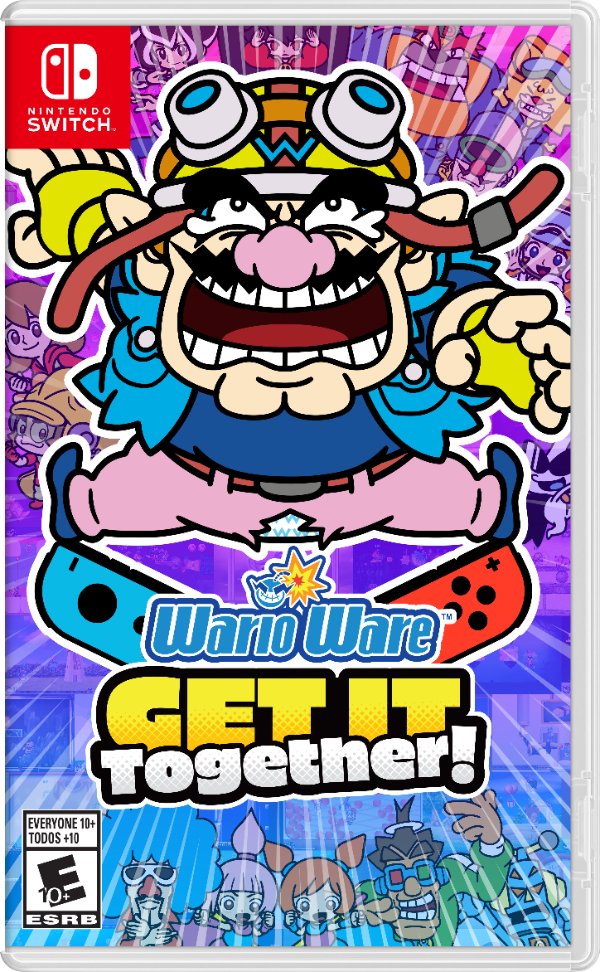
WarioWare: Get It Together!
Overview

WarioWare: Get It Together! is the seventh main entry in Nintendo and Intelligent Systems’ long-running WarioWare microgame franchise, and the first dedicated Nintendo Switch title in the series. Released on 10 September 2021, the game represents the franchise’s most ambitious mechanical reinvention since the original 2003 GBA release: rather than playing microgames through a single input (button press or motion gesture), players now play AS the 18-character WarioWare cast — each with a unique movement and interaction style — inside the microgames themselves.
The result is a fundamentally different WarioWare experience. Microgames now require not just quick reactions but also character-appropriate problem-solving — the same microgame plays completely differently depending on whether you’re Wario (shoulder-charging), Ashley (broom-flying spell-casting), 9-Volt (riding a skateboard) or Dr. Crygor (jet-pack tank). The game retains WarioWare’s signature lightning-fast pace (microgames last 4–5 seconds each) but adds character-action depth that veterans found refreshing and newcomers found accessible.
The Headline Features
- 18 playable characters at launch + 13-Amp post-launch — the entire WarioWare ensemble cast is now playable. Wario, Mona, Jimmy T, Ashley, Orbulon, 9-Volt, Kat & Ana, Dribble & Spitz, Penny, Dr. Crygor, 5-Volt, Young Cricket, Master Mantis, Lulu, Pyoro, 18-Volt, Red, Mike. Each has a unique movement and interaction style.
- The “Forms” system — each character is a unique playstyle. Wario is a horizontal shoulder-charger; Ashley flies with broom-based spells; 9-Volt rides a skateboard horizontally; Master Mantis swings on a pole; Lulu navigates by jet swimming — 18 distinct combat-puzzle-action styles wrapped in microgame chaos.
- 200+ microgames — the signature WarioWare fast-paced minigame cycle. Each microgame lasts 4–5 seconds, presented in increasing difficulty waves.
- Story Mode across 8 stages — a campaign covering Wario’s, Mona’s, Jimmy T’s, Ashley’s, Orbulon’s, 9-Volt’s, Penny’s, and 13-Amp’s themed microgame collections.
- Variety Pack multiplayer modes — dedicated co-op and competitive party games including Daily Grind, Friendless Battle, High Five, Wobble Boxing, and more.
- Wario Cup online challenges — weekly competitive online microgame challenges with global leaderboards.
- 2-player local co-op — every microgame is playable with two players simultaneously, with the second player joining any character.
- Vivid visual style — the franchise’s signature mix of 2D pixel art, 3D anime-influenced character designs, and chaotic mixed-media microgame aesthetics.
Franchise Context
WarioWare: Get It Together! is the seventh main entry in the Nintendo / Intelligent Systems WarioWare microgame franchise, dating back to WarioWare, Inc.: Mega Microgames! on the Game Boy Advance (2003). The franchise has shaped Nintendo’s mini-game culture across nearly two decades.
The WarioWare Family Tree
- WarioWare, Inc.: Mega Microgames! (GBA, 2003) — the original. Established the single-button microgame template.
- WarioWare, Inc.: Mega Party Game$! (GameCube, 2003) — the 4-player party iteration.
- WarioWare: Touched! (DS, 2004) — stylus-based touch controls.
- WarioWare: Twisted! (GBA, 2004 JP / 2005 US/EU) — motion-sensor cartridge gyroscope.
- WarioWare: Smooth Moves (Wii, 2006) — the iconic Wii Remote motion-control entry.
- WarioWare: D.I.Y. (DS, 2009) — player-created microgames.
- WarioWare: Snapped! (DSiWare, 2008) — camera-based microgames.
- Game & Wario (Wii U, 2013) — the GamePad mini-game collection.
- WarioWare Gold (3DS, 2018) — the retrospective compilation.
- WarioWare: Get It Together! (Switch, 2021) — the playable-cast reinvention. This game.
- WarioWare: Move It! (Switch, 2023) — the motion-control sequel.
Where Get It Together! Fits
Get It Together! arrived during the Switch era when Nintendo was actively reviving multiple dormant franchises. The 3-year gap from WarioWare Gold (2018) and the 8-year gap from the last new-mechanic WarioWare (D.I.Y. 2009) meant the franchise was due for reinvention. The decision to make the cast playable was a genuine creative gamble — one that paid off critically and commercially.
Story

Story Setup
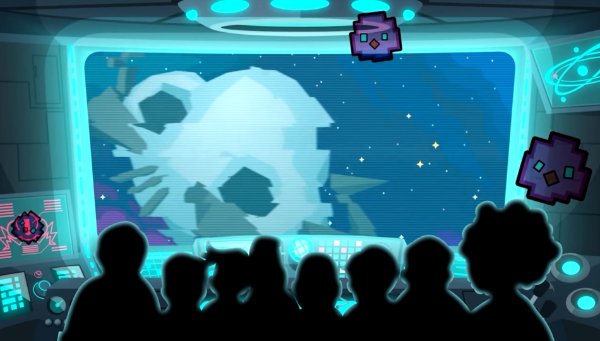
The story opens with Wario launching his latest game console — a brand-new product from WarioWare, Inc. that he has been developing in secret. To celebrate, he loads up the new console and tries to play his first game. However, the system immediately glitches: a strange, animated graphics anomaly appears on the screen, and as Wario watches helplessly, the entire console gets sucked into the screen, leaving him stuck inside the digital world.
Wario quickly discovers that the game world he’s entered is corrupted by mysterious glitch creatures that have invaded the system. With nothing but his own digital avatar (his “Form”), he must navigate the broken game to find the source of the glitches and fix his console.
The Heroes Get Sucked In
One by one, the other WarioWare friends — Mona, Jimmy T, Ashley, Orbulon, 9-Volt, Penny, Dr. Crygor, Cricket, Mantis, and the rest — also get pulled into the corrupted game while trying to help Wario. Each character finds themselves inside their own themed stage of the broken game, where they must complete that stage’s microgames to advance toward defeating the glitch source.

The Antagonist
The campaign’s antagonist is revealed late in the story: 13-Amp, an unknown character whose presence is responsible for the console glitches. The 13-Amp reveal is one of the game’s narrative highlights and the character becomes playable after completing her story arc.
The Forms System
The Forms system is Get It Together!’s defining innovation. Each of the 18 playable characters has a unique movement and interaction style — a “Form” — that fundamentally changes how every microgame plays.
How Forms Work
- Each character is a Form — not just a different appearance. Wario is a horizontal shoulder-charger; Ashley flies via a broomstick with spell-casting; 9-Volt is on a skateboard; Master Mantis swings via a pole; Lulu navigates by jet-swimming. Each Form has unique movement, attack/interaction, and tactical considerations.
- The microgame is the same; the playthrough is different — if a microgame asks you to “knock over the bowling pins,” Wario does it by ramming, Ashley by casting a spell, 9-Volt by skateboarding through, Master Mantis by swinging into them. The objective is identical; the path to victory varies dramatically.
- Random character assignment in Story Mode — the game often assigns random characters to microgames, requiring players to adapt their strategy mid-game.
- Manual character selection in other modes — Variety Pack and Wario Cup modes allow manual character picks, letting players specialize.
- Some characters are objectively better at some microgames — the Forms system creates emergent strategy. Veterans memorize which characters excel at which microgame types.
The 8 Form Categories
The 18 characters fall into rough Form categories based on their movement style:
- Horizontal Chargers — Wario, Master Mantis, Young Cricket. Direct horizontal movement, often ramming attacks.
- Flyers — Ashley (broom), Orbulon (UFO), Mona (pizza-helicopter), Dribble & Spitz (taxi-hover). Aerial movement.
- Skaters/Riders — 9-Volt (skateboard), 18-Volt (skateboard with attacks), Penny (vehicle-rover).
- Swimmers — Lulu (jet swim), Kat & Ana (ninja-flip swim).
- Static Attackers — Pyoro (stationary tongue-extender), Mike (static microphone-fire).
- Boost Specialists — Dr. Crygor (jet-pack), Jimmy T (disco-roller-skates).
- Tanks — 5-Volt (stationary attacker), Red (giant gem-launcher).
18-Character Cast
All 18 characters from the WarioWare ensemble are playable in Get It Together!, plus the unlockable 13-Amp. Each character represents a distinct Form with unique movement and interaction style.
The 18-Character Cast

Wario
FormHorizontal shoulder-charger — the franchise frontman

Mona
FormPizza-helicopter delivery rider

Jimmy T
FormDisco-roller-skating boost specialist

Ashley
FormBroom-flying spell-caster — the breakout fan favorite

Orbulon
FormUFO-flying alien researcher
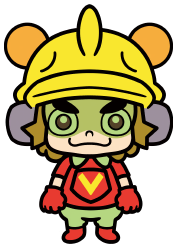
9-Volt
FormSkateboard-riding gamer kid

Kat & Ana
FormNinja-flip twin swimmers

Dribble & Spitz
FormHovering taxi cab duo

Penny
FormVehicle-rover Crygor heir

Dr. Crygor
FormJet-pack tank inventor

5-Volt
FormStatic stationary attacker mom
9-Volt
FormSkateboard-riding gamer

18-Volt
FormSkateboarder with disc attacks

Young Cricket
FormPole-vaulting martial artist

Master Mantis
FormSwinging-pole sensei

Lulu
FormJet-swimming explorer

Pyoro
FormStationary tongue-extending bird

Red
FormGiant gem-launcher prince

Mike
FormStatic microphone-fire karaoke robot
Hidden Character: 13-Amp

13-Amp is the 19th playable character, unlocked after completing 18-Volt’s story arc. She is the antagonist whose presence has been causing the console glitches throughout the campaign. After resolution of her storyline, 13-Amp becomes a playable character with her own unique Form. The character has become a fan favorite as a hidden-roster addition.
Featured: Wario

Wario — The Plumber-Made-Game-Tycoon
Wario is the franchise’s namesake and the player’s default character for the campaign opener. His Form is a horizontal shoulder-charge — he moves left-right with directional momentum and rams into objects (and enemies) to interact. The Wario Form rewards aggressive positioning and quick reaction — if you can’t outpace the microgame timer with sheer ram-power, you lose.
Wario’s Form Mechanics
- Horizontal-only movement — left-right charging. No vertical control.
- Built-in momentum — a successful Wario play means accelerating into the right direction before the timer expires.
- Ram interaction — obstacles, enemies, and target objects are all interacted with by ramming into them at full speed.
- Tutorial-friendly — Wario’s Form is the simplest of the 18 — perfect for new players learning the game’s rhythm.
Why Wario Is the Default Story Character
Wario’s ramming Form is the most accessible introduction to the Forms system. New players can succeed with Wario by mastering horizontal direction-pressing and timing. As the campaign progresses and other characters unlock, players are guided into more complex Form mechanics from this simple Wario baseline.
Featured: Ashley

Ashley — The Goth Witch Star
Ashley emerged as the breakout fan favorite character of Get It Together! Her Form is an aerial broom-flying spell-caster — she flies in 360-degree freedom across the screen, and her interactions are magical spell projectiles cast at targets. The Ashley Form is the most complex of the 18, with full directional freedom and ranged attacks.
Ashley’s Form Mechanics
- 360-degree flight — full aerial freedom across the entire microgame screen.
- Spell projectiles — ranged magic attacks fired at targets. Single-shot per spell button-press.
- Best generalist Form — most versatile across the most microgames. Many speedrunners prefer Ashley.
- Highest skill ceiling — mastering Ashley’s precise positioning and spell-timing is the hardest among the Forms.
Ashley’s Cultural Status
Ashley has been a fan-favorite WarioWare character since her Smash Bros Brawl assist-trophy days, but Get It Together! cemented her as the franchise’s most beloved character. Her Form is the most-discussed in online communities, fan art volume has grown substantially since launch, and her selection in competitive Wario Cup challenges is among the highest of any character.
Featured: Cult Favorites
Beyond Wario and Ashley, several characters earn dedicated cult followings for their distinctive Forms. The 18-character cast has been part of WarioWare for nearly two decades, and Get It Together! gives long-time fans the chance to play as their favorite supporting cast members.
Jimmy T — The Disco King

Jimmy T — Boost-Skating Boost Specialist
Jimmy T is the WarioWare franchise’s disco-themed roller-skating character. His Form combines horizontal momentum with vertical boost-jumps — think Wario’s ramming with directional air-control. He’s a fan favorite for the unique movement profile and his trademark afro-and-disco aesthetic. Jimmy T originated in the GBA WarioWare and has appeared in nearly every entry since.
Orbulon — The Alien

Orbulon — The Floaty UFO Pilot
Orbulon pilots a UFO with full aerial control and projectile attacks. His Form is similar to Ashley’s broom-flying but with a heavier, more deliberate movement profile. The “tractor beam” attack lets him grab and reposition objects, which is unique among the 18 characters. Orbulon’s alien aesthetic and his deadpan personality have made him a cult favorite since the GBA era.
Dr. Crygor — The Inventor

Dr. Crygor — Jet-Pack Tank
Dr. Crygor is the franchise’s cyborg inventor character. His Form is a jet-pack-equipped tank with rocket boosters and projectile attacks. Heavy, slow, but with massive direct-attack power. Veterans who prefer methodical tactical play often gravitate to Crygor for his combination of mobility and firepower.
Master Mantis — The Sensei

Master Mantis — Pole-Swinging Sensei
Master Mantis swings on a fixed pole, with a unique pendulum movement that requires timing-based interaction. His Form is one of the most mechanically distinctive in the 18-character lineup — the swinging-pole dynamic is unlike anything else in the game. Young Cricket’s mentor character; appears with Cricket in many of the franchise’s martial-arts-themed segments.
Penny — The Crygor Heir

Penny — Wheeled Rover Inventor
Penny is Dr. Crygor’s granddaughter. Her Form is a wheeled rover-vehicle with directional acceleration and a chemistry-flask projectile attack. She’s the newest character in the franchise (introduced in WarioWare D.I.Y. 2009), and her Get It Together! Form gives her a uniquely useful tool-based attack style that contrasts with the rest of the cast’s simpler interaction patterns.
200+ Microgames
Get It Together! delivers 200+ microgames across its various modes — the signature WarioWare format compressed into 4-5 second challenges that ramp up in difficulty as you survive. Each microgame is a self-contained tiny game with a clear objective: shoot, dodge, collect, knock over, sing, etc.
Microgame Sample Gallery

Wanted

Hypnotize
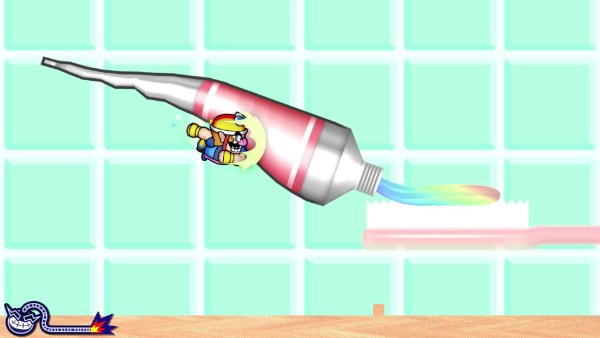
Toothpaste
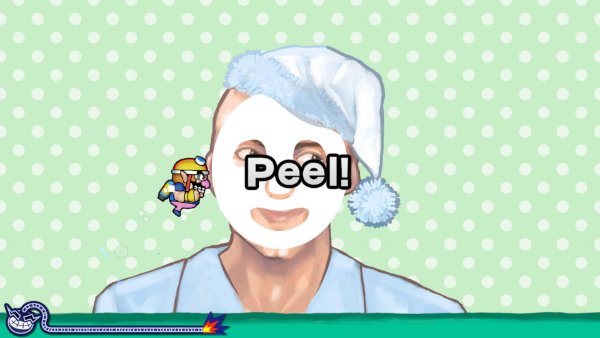
Face Mask

Teeth

Knock Over

Bubble Catch

Windmill
Microgame Categories
- Wario-themed microgames — the franchise opener category. Crude humor, garlic, dental hygiene, etc.
- Mona-themed microgames — pizza delivery, romance, college life.
- Jimmy T-themed microgames — disco, dancing, retro pop culture.
- Ashley-themed microgames — dark magic, witches, cauldrons, spell-casting.
- Orbulon-themed microgames — alien research, UFOs, abductions.
- 9-Volt-themed microgames — retro Nintendo references, classic NES/GB callbacks.
- Penny-themed microgames — chemistry experiments, lab equipment.
- Plus genre-mixed microgames — sports, food, fantasy, technology, life, mixed.
Microgame Mechanics
- 4–5 second time limit per microgame — the signature WarioWare pace.
- Increasing speed/difficulty waves — the longer you survive, the faster microgames run and the more complex they become.
- Lose 4 lives, game over — each failed microgame costs a life.
- Character-dependent play — unlike previous WarioWare games, the same microgame plays completely differently based on which character you control.
8 Story Stages
Story Mode in Get It Together! is structured across 8 themed stages, each centered on a particular WarioWare character or theme. Stages progress in increasing difficulty and unlock new playable characters as players advance.
Wario’s Stage

The campaign opener. Wario gets sucked into his own game console and must clear the first wave of glitch microgames.
That’s Life

Real-life-themed microgames covering everyday activities like brushing teeth, eating, sleeping, etc.
Fantasy

Ashley’s themed stage. Magic, witches, dark fantasy aesthetics throughout.
Technology

Dr. Crygor’s themed stage. Robots, science, cyborg-inventor microgames.
Sports

Sports-themed microgames — tennis, basketball, baseball, etc.
Food

Mona’s themed stage. Food, cooking, pizza-delivery microgames.
Remix

Mixed-genre stage. Combines microgames from previous stages with new variants.
All Mixed Up

The endgame stage. All microgame types randomly combined into maximum-chaos final wave.
Variety Pack
The Variety Pack is Get It Together!’s dedicated multiplayer mode collection — 6 distinct mini-games designed for 2-4 player party play, each using the Forms system in different competitive formats.

Daily Grind
Daily microgame challenges with leaderboards. Each player picks a Form and competes for high scores in randomly-selected microgame sets.

Friendless Battle
Free-for-all combat mode where players use their Form attacks to eliminate other players. Last Form standing wins.

High Five
Co-op mode where 2-5 players work together to score 5 successful microgames in a row. Requires team coordination.

Wobble Boxing
Boxing-themed competitive mode. Players use their Forms to land combo hits in a wobble-physics ring.

Boxing Cowards
Cowardly variant of Wobble Boxing. Players score by dodging incoming attacks rather than landing them.

Boxed Up
Box-themed competitive mode. Players try to stay in their box while knocking opponents out of theirs.
Wario Cup Online
The Wario Cup is Get It Together!’s online competitive challenge mode — a weekly rotating challenge format where players from around the world compete on global leaderboards for top scores.
Wario Cup Format
- Weekly themed challenges — every week, a new challenge format unlocks. Examples: “Wario only,” “All characters random,” “Hard mode only,” “Beat-the-leader challenge.”
- Global leaderboards — worldwide ranking by score. Top scores are recognized in-game with cosmetic rewards.
- Single-attempt structure — each weekly challenge gives players a single shot at the leaderboard. Strategic risk-management decisions.
- Variable rules per challenge — some challenges restrict character selection, others limit life counts, others enforce specific microgame categories.
- Online connectivity required — Wario Cup challenges require a Nintendo Switch Online subscription.
Why Wario Cup Stands Out
The Wario Cup is one of the strongest competitive features in any party-game on Switch. The weekly rotation prevents stagnation, the variable rules create genuine strategic depth, and the global leaderboards add prestige incentive. Many Get It Together! players cite Wario Cup as the primary reason they continue playing the game months after launch.
Local Multiplayer
Local Multiplayer Features
- 2-player co-op — every Story Mode microgame is playable with two players simultaneously. Both players are inside the same microgame, working together (or coordinating to avoid interfering).
- Single Joy-Con sharing — the second player can use a single Joy-Con while the first uses standard controls.
- Variety Pack 4-player modes — Friendless Battle, High Five, and Wobble Boxing support up to 4 players.
- Local wireless multiplayer — multiple Switch consoles can connect for larger group play.
- Shared experience — the chaos of two players in the same microgame creates the franchise’s most-laugh-inducing moments.


Visual Style
The WarioWare Visual Identity
Get It Together! continues the WarioWare franchise’s signature mix of visual styles — a deliberate visual chaos that has defined the series since 2003:
- 2D pixel-art microgames — the simplest microgames retain the GBA-era pixel art for visual nostalgia.
- 3D anime-influenced character models — the playable characters use 3D models with anime-style proportions.
- Mixed-media stage backgrounds — each stage has a distinct visual style appropriate to the character or theme.
- Saturated color palettes — vivid yellows, purples, magentas, and reds dominate the visual language.
- Comic-book-style text and effects — microgames feature comic-book-style “POW!” “BOOM!” “WIN!” text effects.
- 1080p Switch presentation — the game runs at 1080p docked and 720p portable with consistent 60fps.
Director Goro Abe’s Style
Director Goro Abe, a 20-year WarioWare franchise veteran, brought his signature mixed-media aesthetic. The visual language deliberately combines retro and contemporary art styles — a microgame might feature pixel-art enemies on a hand-drawn background with anime-style characters interacting. The chaotic mix is intentional, reinforcing the WarioWare brand’s “anything goes” identity.
Soundtrack
Sound Design & Music
Get It Together!’s soundtrack and sound design continue WarioWare’s tradition of varied, energetic music. The franchise has always blended electronic, chiptune, J-pop, and instrumental styles — Get It Together! is no exception.
- Character-themed music — each character’s stage features music in their thematic style (Ashley’s dark-magic chamber music; Jimmy T’s disco beats; 9-Volt’s chiptune; etc.).
- Microgame audio cues — each microgame has distinctive 1-3 second sound effects that signal success or failure.
- Voice acting — each character has voice clips for victories, defeats, and emotional reactions. Ashley’s voice work is particularly fan-favorite.
- Composer team — Nintendo’s in-house composers led by long-time WarioWare music director.
Development
Development
WarioWare: Get It Together! was developed by Intelligent Systems with co-production by Nintendo. Director Goro Abe, a 20-year WarioWare franchise veteran, led development. The game was the first dedicated Switch WarioWare title — a long-awaited entry after the 3-year gap from WarioWare Gold (3DS, 2018).
The Decision to Make the Cast Playable
The decision to make the 18-character cast playable was reportedly the core creative pitch from the development team. Director Abe noted in pre-launch interviews that the team had been exploring ways to give WarioWare’s long-running cast more agency — to let players play AS their favorites rather than just see them in cutscenes. The Forms system emerged from this design pillar.
Development Timeline
- 2018–2019 — early concept development. Intelligent Systems team explores “playable cast” mechanics.
- 2019–2020 — prototype phase. Forms system tested with reduced character roster.
- 2020–2021 — full production. 18 character Forms designed and balanced. 200+ microgames created.
- June 2021 — announcement at Nintendo Direct E3 2021.
- September 2021 — worldwide release.
Videos & Trailers
Four verified official Nintendo trailers covering WarioWare: Get It Together! from E3 2021 reveal through launch.
Reception
WarioWare: Get It Together! launched on 10 September 2021 to generally positive reviews — Metacritic 76, IGN 7/10, Game Informer 8.5/10, Nintendo Life 8/10, GameSpot 7/10, Eurogamer “Recommended.”
Acclaim
- The Forms system is a genuine innovation — widely cited as the most exciting WarioWare mechanical change since the GBA original. The character-driven gameplay layer adds depth previous entries lacked.
- Visual style remains a delight — the mixed-media aesthetic, character designs, and chaotic microgame art are franchise highlights.
- Variety Pack multiplayer modes — the 6 dedicated party-game modes received praise as the strongest multiplayer offering in any WarioWare title.
- Wario Cup weekly challenges — the online competitive format was singled out as a clever community engagement design.
- 200+ microgames — the franchise’s signature value-for-money microgame count is preserved.
- Co-op throughout Story Mode — the 2-player co-op design makes the game shine in social settings.
Criticisms
- Some Forms feel less versatile than others — the 18-character roster has inherent imbalances. Some characters excel at certain microgame types, while others struggle. Veterans found this frustrating in random-character story missions.
- Short campaign length — Story Mode is approximately 4-6 hours of content. WarioWare campaigns have always been short, but reviewers noted the lower replay-value per microgame given the longer interaction layer.
- Microgame variety lower than predecessors — the 200+ microgame count is similar to past games, but some reviewers felt the variety was lower because each microgame is now interacted with through 18 different Forms.
- The new mechanic doesn’t always serve the franchise’s core appeal — traditionalist fans missed the single-input quick-reaction simplicity of older WarioWare titles.
Sales & Performance
Sales Performance
- Launch week (Sept 2021) — #2 UK launch week, top 10 US, strong Japan launch (~30k copies week one).
- End of 2021 — ~1.4 million copies sold worldwide.
- Lifetime estimate — around 1.5–2 million copies. A solid but not exceptional result for a WarioWare title.
- Compared to WarioWare Gold (3DS) — Gold (~1M lifetime). Get It Together! outperformed slightly.
- Compared to WarioWare: Smooth Moves (Wii) — Smooth Moves (~3M lifetime). Get It Together! underperformed.
Commercial Context
Get It Together! launched during a busy Switch fall 2021 season alongside Metroid Dread, Mario Party Superstars, and several major third-party titles. The crowded release window contributed to softer sales than Nintendo’s expectations. The game’s success was sufficient to greenlight Move It! 2 years later, but did not match franchise-peak sales of the Wii-era Smooth Moves.
Legacy
Legacy
- The Forms system as franchise innovation — the playable-cast mechanic redefined what a WarioWare game could be. Move It! (2023) continued with motion-control Forms, suggesting Nintendo views this as an enduring innovation.
- Ashley’s status cemented — the game elevated Ashley from cult favorite to mainstream fan favorite. Her playable Form became the most-played, and her cultural visibility increased substantially.
- Online Wario Cup precedent — the weekly competitive online format influenced subsequent Nintendo party-game design.
- Bridge to Move It! (2023) — Get It Together!’s success enabled the 2-year-later motion-control sequel, continuing the franchise into the latter half of the Switch lifecycle.
- Goro Abe’s continued WarioWare leadership — Abe remained the franchise director through Move It! and beyond.
Trivia & Facts
- The first WarioWare game with a playable cast — a fundamental franchise mechanical innovation.
- The first dedicated Nintendo Switch WarioWare entry.
- Released 10 September 2021, exactly 3 years 1 month after WarioWare Gold (3DS, Aug 2018).
- Developed by Intelligent Systems, directed by Goro Abe (20-year franchise veteran).
- 18 playable characters at launch + 13-Amp post-story unlock = 19 total Forms.
- 200+ microgames across 8 themed story stages.
- Ashley emerged as breakout fan favorite — her broom-flying Form is the most-played and the most-discussed in online communities.
- The Forms system means each microgame plays 18+ different ways — effectively multiplying the game’s perceived content.
- 2-player co-op throughout Story Mode — every microgame supports both players in the same screen.
- 6 Variety Pack multiplayer modes — Daily Grind, Friendless Battle, High Five, Wobble Boxing, Boxing Cowards, Boxed Up.
- Online Wario Cup challenges — weekly rotating competitive format with global leaderboards.
- Game Console glitch story setup — the narrative premise of Wario getting sucked into his own broken game console.
- 13-Amp is the campaign antagonist turned playable character after story completion.
- Penny is Dr. Crygor’s granddaughter — a relatively new addition to the WarioWare cast (introduced in D.I.Y. 2009).
- Master Mantis is Young Cricket’s sensei — their dynamic is central to multiple microgames.
- 5-Volt is 9-Volt’s mother — introduced as a recurring character. Get It Together! is her first playable appearance.
- The game’s “WAH” sound effect — Wario’s signature catchphrase — is the source of the accolades trailer name “WAHccolades.”
- Lifetime sales estimated ~1.5–2M copies — solid but not exceptional. Below Wii-era Smooth Moves (~3M).
- Bridge to Move It! (2023) — the motion-control sequel that perfects Get It Together!’s innovations.
- Metacritic 76 — the lowest-rated mainline WarioWare but reflects divided opinion rather than poor quality.
Reference / Information
Related coverage on Super Luigi Bros.