
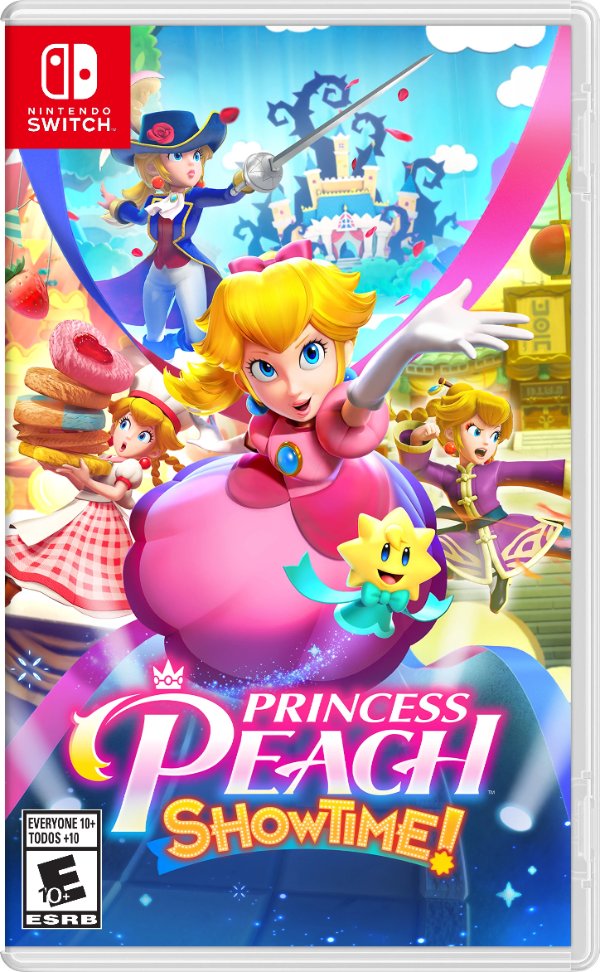
Princess Peach: Showtime!
Overview

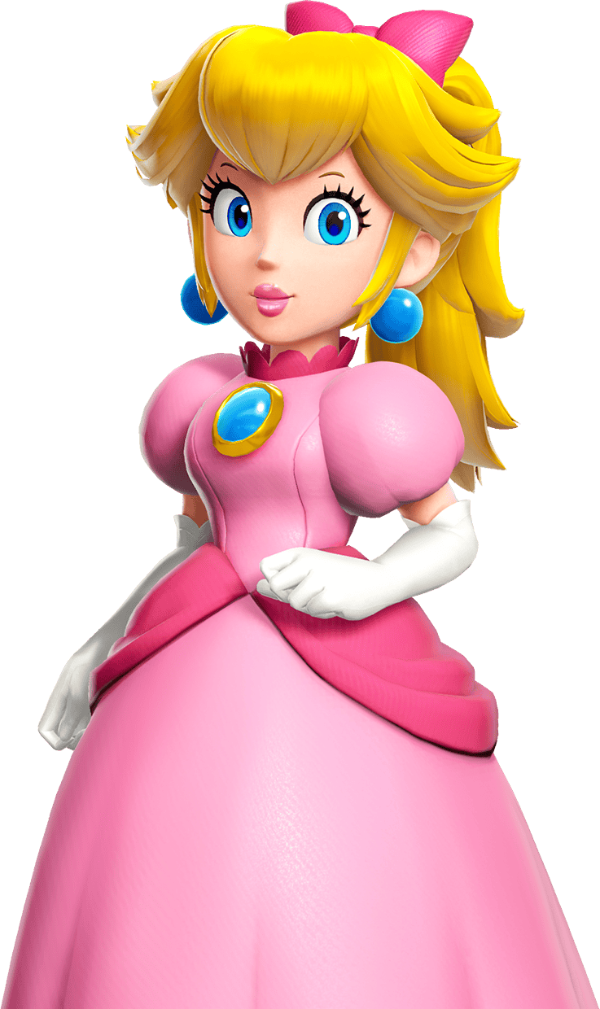
Princess Peach: Showtime! is a single-player action-adventure game, released worldwide on 22 March 2024 exclusively for Nintendo Switch. It is the first solo-Peach starring vehicle since Super Princess Peach (DS, 2005) and a watershed moment for the character — a deliberate, polished spotlight on Peach’s own playable identity rather than her usual rescue-target role in the Mario franchise.
The game was developed by Good-Feel, the Osaka-based studio behind Yoshi’s Crafted World, Yoshi’s Woolly World, Wario Land: Shake It!, and Kirby’s Epic Yarn — a developer with a long and well-respected track record in Nintendo’s second-party stable, especially for charming and visually distinctive 2.5D platformers.
The Concept
The premise is wonderfully theatrical: Peach has been invited as a guest of honour to the Sparkle Theater, a five-storey variety theatre whose musical-theatre productions are about to be hijacked by an opening-night attack from the Sour Bunch, a troupe of pink-and-purple villains led by the diva-evil Grape. With the help of the theatre’s resident spirit Stella (who can transform into a ribbon and lend Peach her sparkle powers), Peach has to step into each of the theater’s sabotaged plays and save them from the inside — becoming the lead actress in 10 distinct theatrical transformations, each with its own genre, mechanics, and visual identity.
The 10 Transformations — Headline Mechanic
The defining feature of PPS is that Peach doesn’t have one set of moves — she has ten. Each transformation is a fundamentally different playstyle. Swordfighter Peach plays like a Zelda-lite combat brawler, Patissière Peach plays like a baking-themed puzzle game, Detective Peach plays like Phoenix Wright with magnifying glass, Cowgirl Peach plays like a horseback action game, Ninja Peach is stealth-based, Mermaid Peach is underwater puzzle-platforming, and so on. The variety is the entire selling point.
Story

Opening Night
Princess Peach receives a glamorous invitation to a special opening-night gala at the Sparkle Theater, a grand five-storey variety venue famous for its lavish musical-theatre productions. She arrives by horse-drawn carriage to find a stunning lobby, attentive ushers (the small mushroom-like Theets), and a stage being prepared for the evening’s programme.
The Sour Bunch Strikes
As the curtain rises, the entire theatre is suddenly invaded by the Sour Bunch — a troupe of purple-cloaked villains led by the pink-haired and grape-themed Grape. The Sour Bunch storms each of the theatre’s sabotaged plays, transforming the actors into corrupted “Dooke” enemies, hijacking the storylines, and threatening to ruin every performance.
Stella Appears
In the chaos, Peach meets Stella — the resident spirit of the Sparkle Theater, a small ribbon-shaped creature with sparkle powers. Stella explains that Grape has stolen the theatre’s magical Sparkle, and that only Peach can recover it by stepping into each play and starring in it personally. Stella transforms into a ribbon that wraps around Peach’s wrist, lending her the Sparkle ability and unlocking transformations as she progresses.
Save Every Play
Peach works her way through the theater floor by floor, with each floor hosting two or three different plays, each with a different transformation. By starring in each play — wielding a sword in the Swordfighter play, baking in the Patissière play, sleuthing in the Detective play — she defeats the Sour Bunch’s sabotage attempts and restores the Sparkle to that act.
Confronting Grape
After saving plays on all five floors, Peach descends to the basement for the grand finale: a direct confrontation with Grape herself, who has transformed into her most threatening form. The final battle uses every transformation Peach has learned — calling on Swordfighter, Mermaid, Mighty, and the rest in rotation to overcome each of Grape’s phases. Stella’s sparkle is recovered, the Sparkle Theater is restored, and Peach takes a final triumphant curtain call.
Gameplay
Princess Peach: Showtime! is structured as a series of self-contained “plays” — each set on a stage with a beginning, middle, and end, complete with curtains, audience reaction shots, and theatrical lighting cues. Plays are accessed from the Sparkle Theater’s five floors plus the basement; each is roughly 20–40 minutes long.
Core Loop — The Play Structure
- Enter a play by walking to a stage door on a theatre floor.
- Transform into the play’s designated role (Swordfighter, Patissière, etc.) as the curtain rises.
- Progress through the play — a linear stage-by-stage action sequence with the transformation’s unique mechanics.
- Defeat the Sour Bunch boss at the play’s climax — a themed boss fight that uses the transformation’s tools.
- Curtain call — the play ends, the Sparkle is recovered, and Peach exits to the theatre lobby.
Sparkle — Stella’s Magic
Peach’s primary power is the Sparkle, granted by Stella the ribbon-spirit. The Sparkle is what allows Peach to transform into each of the 10 forms; it also lets her perform a Sparkle Heart Throw — a ranged projectile that can be aimed at distant enemies, switches, and corrupted Dookes to free them.
Heartthrobs — Healing & Acclaim
Throughout each play, Peach gains Heartthrobs by performing well in the play’s context — striking poses, executing successful combos, freeing audience members. Heartthrobs serve as both a health-meter and a reputation score, with higher Heartthrob ratings unlocking customisation rewards and special endings.
Difficulty & Accessibility
PPS is deliberately designed for broad accessibility — the difficulty is gentle, healing items are generous, and most plays can’t be permanently failed. This was a polarising choice in reviews (“too easy” was the most common critique) but it positions PPS as a younger-audience friendly first Switch action-adventure, in the spirit of Yoshi’s Crafted World.
Stella & Sparkle

Stella is the resident spirit guardian of the Sparkle Theater — a small, sparkle-emitting creature who has lived among the theater’s rafters for generations. She protects the theatre’s Sparkle magic and serves as the audience’s liaison between the Mario-universe and the Sparkle Theater’s magical reality.
Stella’s Powers
- Ribbon Form — Stella transforms into a sparkling ribbon that wraps around Peach’s wrist, lending her the Sparkle power.
- Sparkle Heart Throw — the ribbon channels into a heart-shaped projectile that Peach can throw at enemies, switches, and corrupted Dookes to free them.
- Transformation Conduit — Stella’s sparkle is what allows Peach to assume each of the 10 theatrical forms. Without Stella, Peach is just Peach.
- Costume Customisation — Stella herself wears tiny matching ribbons that can be swapped to suit Peach’s outfit.
Stella as a Character
Beyond her gameplay role, Stella is a sweet and earnest companion — not a snarky sidekick like Tippi (Super Paper Mario) or a stoic guide like Beep-0 (Mario + Rabbids). She is genuinely scared of Grape, deeply attached to the theatre, and visibly emotional when each play is saved. Her presence anchors the game’s emotional through-line.
The Sparkle Theater

The Sparkle Theater is the entire setting of PPS — a five-storey variety theatre, plus a basement, plus the lobby. Each floor hosts two or three plays (each tied to a different transformation), giving roughly 15–18 separate playable shows across the whole building.
The Floors
The Welcome Floor

The grand lobby floor. Home to introductory plays — typically the first Swordfighter and Patissière shows. Where Peach first meets Stella.
Mid-Stage

The second floor expands the transformation roster, typically with Detective, Cowgirl, and Kung Fu Peach plays.
Adventure Stages

The middle of the theatre. Hosts the Mermaid, Mighty, and Ninja plays — the more action-oriented transformations.
Elegance Floor

The fourth floor is themed around poise and grace — Figure Skater and other rhythm-oriented plays dominate.
The Grand Stage

The penthouse-level floor with the grandest plays — including the climactic Dashing Thief sequences and the higher-stakes final acts.
The Final Stage

The hidden basement where Grape has fortified her stronghold. The final battle takes place here, calling on every transformation Peach has learned.
Sparklas — The Transformation Spirits
Each transformation has its own associated Sparkla — a small magical orb that personifies the role and accompanies Peach in that form. There’s a Swordfighter Sparkla, a Patissière Sparkla, a Detective Sparkla, and so on. The Sour Bunch corrupts these Sparklas first, which is why each play needs Peach to enter and rescue them. Defeating a play’s Sour Bunch boss restores its Sparkla.
10 Transformations
The defining feature of Princess Peach: Showtime! is its 10 distinct theatrical transformations — each a fully different gameplay genre, set, and mechanic. Each transformation is unlocked progressively as Peach saves more of the Sparkle Theater’s plays, and each has its own playable “show” with bespoke mechanics, enemies, and bosses.

Swordfighter Peach
Action
Sword-and-shield combat brawler. Light/heavy attacks, dodge-rolls, parry-counters — plays like a Zelda-lite action combat game. Battles knights, ghost soldiers, and a Dark Swordfighter boss.

Patissière Peach
Rhythm
Baking-themed minigames. Mix, decorate, and serve enormous theatrical desserts to free corrupted Sparklas. Rhythm-action presses to match musical cues.

Detective Peach
Mystery
Phoenix Wright-style magnifying-glass mystery solver. Inspect crime scenes, gather clues, question suspects, and identify culprits. The most narrative-heavy transformation.

Cowgirl Peach
Action
Horseback cowgirl action. Lasso enemies, ride faithful horse companion across western-themed sets, shoot up Sour Bunch outlaws. Wild-West shootout meets stage drama.

Kung Fu Peach
Action
Kung fu master with rapid-strike combos. Quick punches, kicks, and spinning attacks against waves of Kung Fu Dookes. The most combo-heavy transformation.

Mermaid Peach
Underwater
Underwater swimming and singing. Conduct schools of fish with rhythm-action cues to clear stage hazards. Visual highlight of the game.

Ninja Peach
Stealth
Stealth specialist. Sneak past spotlights, vanish into shadows, ambush Ninja Dookes silently. Includes shuriken-throwing and grappling-hook traversal.

Figure Skater Peach
Performance
Ice-skating elegance combat. Glide gracefully across icy stages, perform spin attacks, weave figure-eight evasion patterns. Rhythm-graceful hybrid.

Mighty Peach
Power
Superhero powerhouse. Punch through walls, lift enormous objects, deflect projectiles. Beat-em-up action with the highest damage output and slowest movement.

Dashing Thief Peach
Stealth
Cat-burglar-style stage navigation. Wall-climb, dash through opening windows, swipe priceless treasures from Sour Bunch holding rooms. Stylish and acrobatic.
Form Deep Dives
A closer look at each transformation’s mechanics, set design, and signature moments.
Swordfighter Peach — The Action Standard

Swordfighter is the genre baseline of PPS, the first transformation most players unlock. Peach wields a thin rapier-style blade with a small parrying buckler. The combat is rhythm-flavoured action: light attacks chain quickly, heavy attacks need a tell, and successful parries open enemies for finishers. The boss is the Dark Swordfighter, Peach’s shadowy mirror-image, fought across multiple sword-clash phases.
Patissière Peach — The Baking Show

Patissière Peach is one of PPS’s most unusual transformations: a rhythm-action baking minigame. Peach prepares enormous theatrical desserts to feed corrupted Sparklas (the magical orbs that personify each transformation). The play takes place in a giant bakery set with theatre lighting, and gameplay involves quick-time mixing, decorating, and serving prompts matched to a musical beat.
Detective Peach — The Mystery

The most narrative-heavy transformation. Peach explores crime-scene sets with a magnifying glass, gathering clues, then questions Theet witnesses and identifies culprits in a Phoenix Wright-style sequence. The “Case of the Missing Mural” is the centerpiece mystery.
Cowgirl Peach — The Wild West

Horseback action across a Wild West stage set. Peach rides a faithful horse companion, lassoing Sour Bunch outlaws, leaping fences, and shooting up Cowboy Dookes. The play includes a saloon shootout and a high-noon duel.
Kung Fu Peach — The Brawler

Rapid-combo martial arts brawler. Punches, kicks, and spinning attacks chain into chargeable specials. The set is a temple courtyard with sliding paper doors. Largest enemy waves of any transformation.
Mermaid Peach — The Underwater Stage

Underwater swimming and conducting. Peach uses her sparkle to conduct schools of fish as a rhythm-action ensemble — swiping in patterns to direct them through stage obstacles. The visual highlight of the game; multiple reviewers cited it as the prettiest sequence.
Ninja Peach — The Shadow

Stealth specialist. Sneak past spotlights, vanish into shadows, throw shuriken from cover. Boss is the Dark Ninja, Peach’s shadowy ninja mirror. Includes a memorable rooftop chase sequence.
Figure Skater Peach — The Ice Performance

Ice-skating action with rhythm-graceful hybrid gameplay. Glide across icy stages, perform combo-spins, weave figure-eight evasion patterns around Skater Dookes. Combat is balletic and choreographed.
Mighty Peach — The Superhero
Superhero powerhouse. Punches through walls, lifts enormous objects, deflects projectiles. The slowest-moving but highest-damage transformation. Set design includes a comic-book-styled skyline with skyscrapers Peach can leap between.
Dashing Thief Peach — The Cat Burglar

Cat-burglar stage navigation. Wall-climbs, dash through opening windows, swipe priceless treasures from Sour Bunch holding rooms. Often considered the most stylish and acrobatic transformation — think Lupin III meets Mario.
Rehearsals
Beyond the main plays, each transformation has dedicated Rehearsal stages — shorter, more focused training sequences where Peach can practice each form’s moves in isolation. Rehearsals reward gold trophies for completing them with maximum Heartthrob ratings, which in turn unlock cosmetic customisation items.


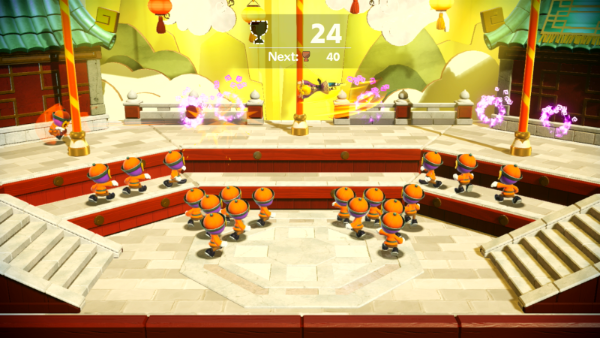
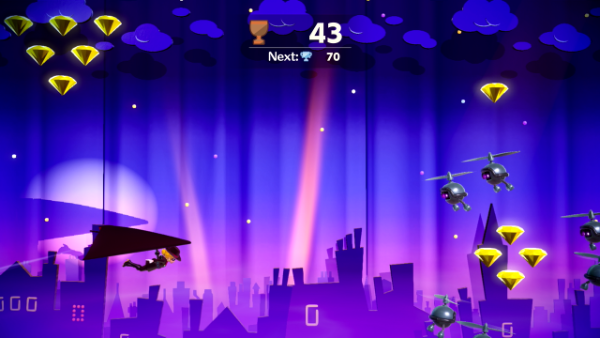
Each rehearsal has its own target metrics — completion time, enemies defeated, audience members rescued, Sparkle gathered. Gold trophy ratings on every rehearsal unlock the final customisation set.
Customization

Dresses
Peach’s base-form dress can be customised with over a dozen unlockable variants — Regular, Polka-Dot, Horizontal Stripes, Vertical Stripes, Two-Tone, Gradient, Starry, Heart, and more. Dresses are earned through play completion, Heartthrob ratings, and rehearsal gold trophies.
Ribbons (for Stella)
Stella, in her ribbon form, can also wear different colours — Regular, Red, Blue, Yellow, Orange, Lime, Light-Blue, and more. Ribbons match the dresses for full coordinated outfits.
Theater Renovations
Performing well unlocks decorative upgrades for the theater itself — fresh paint on the walls, new lighting fixtures, expanded lobby furnishings. The theater visually transforms as you progress through the campaign.
The Sour Bunch

Grape — The Diva Villain
Grape is the leader of the Sour Bunch and the primary antagonist of PPS. A pink-haired and grape-themed villainous performer, she has a personal vendetta against the Sparkle Theater — her motives revolve around starring in the theatre’s plays herself and seizing the Sparkle for her own.
The Sour Bunch
The Sour Bunch are Grape’s troupe — a group of purple-cloaked villains who follow her into each play, disguising themselves to match the play’s setting (alien outfits for sci-fi plays, mermaid disguises for underwater plays, figure-skater outfits for ice plays, etc.). Their job is to sabotage each performance and corrupt the play’s Sparkla, forcing Peach to liberate every show.
Grape
Main Villain
Diva-evil leader. Wants the theatre’s Sparkle for herself. Final battle takes place in the basement.

Sour Bunch (Standard)
Standard Minion
Purple-cloaked goons. The standard infantry of Grape’s troupe — they appear in every play in some form.

Sour Bunch (Alien)
Sci-Fi Play
Grey alien-themed Sour Bunch variant from sci-fi-themed plays. Disguise + sabotage tactic.

Sour Bunch (Mermaid)
Mermaid Play
Mermaid-themed Sour Bunch variant for the underwater play. Costumed for the underwater setting.

Sour Bunch (Figure Skater)
Skater Play
Figure-skater themed variant for the ice play. Wears skating costumes to blend in with the play’s actors.
Dookes & Enemies
Beyond the Sour Bunch leaders, each play has its own variety of Dookes — the corrupted minions Peach must defeat or free.

Soldier Dooke
Standard armoured infantry. Common in Swordfighter plays.

Ghost Swordsman
Ghostly sword wielder. Phases through walls. Tougher swordfighter variant.

Bat Dooke
Aerial pest. Swoops on Peach in flight. Common in nighttime stage sets.

Ghost Bat
Tougher haunted bat variant. Resists most attacks until stunned with Sparkle Heart Throw.

Ninja Dooke
Stealth specialist. Appears in Ninja Peach plays. Vanishes mid-attack to reposition.

Mermaid Dooke
Underwater foe in the Mermaid play. Dark, corrupted, requires schools-of-fish counter-attack.

Green Kung Fu Dooke
Martial artist enemy in Kung Fu plays. Quick-strike combo specialist.

Ghost Soldier
Haunted armoured combatant. Mid-tier enemy in spooky-themed plays.
Boss Variants — Dark Forms
Each transformation’s climactic boss is a Dark mirror version of Peach herself, corrupted by the Sour Bunch:


Grape & Finale
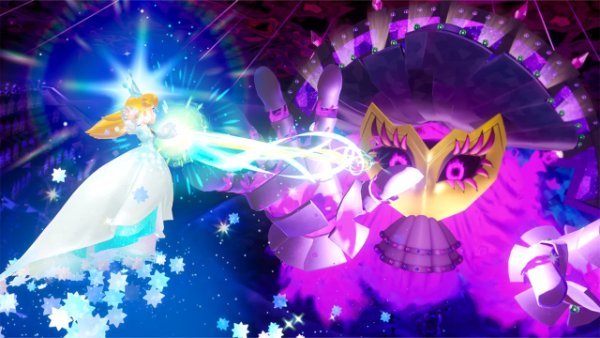
After Peach has saved every play across the five upper floors of the Sparkle Theater, she descends to the basement for the climactic confrontation with Grape herself.
The Multi-Phase Showdown
The final battle is structured as a greatest-hits transformation sequence — each phase requires Peach to switch into a different transformation she has learned, calling on Swordfighter to parry Grape’s blade attacks, Mighty to lift falling debris, Mermaid to swim through flooded sections, and Ninja to evade Grape’s spotlight traps. The fight serves as a victory lap that reminds players why each transformation matters.
The Curtain Call
After Grape is defeated, Stella’s sparkle is restored to the Sparkle Theater. The grand finale takes the form of a triumphant curtain call — every transformation Peach has assumed during the campaign takes the stage one final time, accompanied by the Theet audience’s standing ovation. The credits roll over fully-restored theatre footage.
Videos & Trailers
Official Nintendo promotional videos covering Princess Peach: Showtime!
Other Official Marketing
Beyond the Nintendo Direct trailers above, the game received an extensive Nintendo of America YouTube marketing campaign in early 2024:
- “Sparkling Looks” Trailer (Feb 2024) — a deep-dive on the 10 transformations’ visual styles and outfit variety.
- Overview Trailer (March 2024) — a comprehensive walkthrough of every transformation, the Sparkle Theater, and the Sour Bunch released two weeks before launch.
- Launch Trailer (22 March 2024) — the launch-day Nintendo trailer accompanying the game’s worldwide release.
- Peach Power Tutorials — a series of short tutorial videos for each individual transformation, released in the weeks following launch.
- Accolades Trailer (April 2024) — a post-launch trailer compiling positive review quotes for the game.
All trailers can be found on the Nintendo of America YouTube channel by searching “Princess Peach Showtime.”
Reception

Princess Peach: Showtime! launched on 22 March 2024 to generally favourable reviews — Metacritic in the high 70s, IGN 8/10, Game Informer 8.5/10, Nintendo Life 8/10 — with one consistent reservation about difficulty and length that prevented it from reaching the very top of 2024’s critical lists.
Acclaim
- The transformation variety — universally cited as the standout achievement. The idea of one game containing 10 fundamentally different gameplay genres without losing visual or thematic coherence is hard to overstate.
- Visual presentation — Good-Feel’s art direction was widely praised, with the Mermaid play’s underwater sequences and the Figure Skater play’s ice rink in particular drawing rave coverage.
- Peach as a lead — reviewers welcomed Peach’s genuine starring role rather than damsel positioning. The character work was called confident, varied, and respectful.
- Set design — every play’s theatrical staging (visible curtains, lighting cues, audience reaction shots, Theet ushers) was praised as the most committed theme-execution Nintendo had attempted on Switch.
- Music — each play has its own musical score reflecting its theme; the Patissière play’s baking-rhythm theme and the Mermaid play’s orchestral score were particular highlights.
Criticisms
- Easy difficulty — the most-cited criticism. Even on the higher difficulty settings, plays could rarely be permanently failed, and combat encounters offered limited challenge. PPS was widely positioned as a younger-audience entry point.
- Short length — main campaign runs 10–12 hours, with completionist runs around 15–20. For a $59.99 title, some reviewers felt this was light, even with 10 transformations’ worth of variety.
- Transformation depth — inversely related to the variety: with 10 transformations, no single one has the mechanical depth of (say) Bayonetta’s combat or Phoenix Wright’s mystery system. Each play is a sampler rather than a deep dive.
- Camera issues — occasional fixed-angle camera frustrations in tight stage spaces during combat sequences.
Sales
Sales Performance
- Launch week (22–28 March 2024) — strong opening: UK debut at #1, Japan launch sold 188,000 physical copies in the first three days (3rd-best Switch launch of 2024 at that point).
- End of June 2024 (Q1 fiscal report) — 1.22 million copies sold worldwide, per Nintendo’s Q1 financial briefing.
- End of December 2024 — over 3 million copies sold, comfortably profitable for a single-character side-project.
- By 2025 — estimated 3.4–3.7 million copies, with steady long-tail sales especially around holiday periods.
Context
For a Peach-led action-adventure on a 7-year-old Switch console, 3M+ is a respectable result. By comparison, Super Princess Peach (DS, 2005) sold approximately 1.15 million copies lifetime — PPS surpassed that figure within months of launch.
Trivia & Facts
- First solo-Peach console game ever — PPS is the first solo-Peach starring vehicle on a home console. Super Princess Peach (DS, 2005) was the only previous solo-Peach game and it was handheld-only.
- 19 years since the last Peach solo game — a wait so long it became a running joke in Peach-fan communities. PPS’s announcement at the September 2023 Nintendo Direct was met with genuine emotional response.
- Developed by Good-Feel, the studio behind Yoshi’s Crafted World, Yoshi’s Woolly World, Wario Land: Shake It!, and Kirby’s Epic Yarn. PPS marks Good-Feel’s first non-Yoshi/non-Kirby Nintendo project.
- The 10 transformations were the headline pitch — internally codenamed “the variety project,” the game’s design brief was always to showcase Peach’s versatility through wildly different gameplay genres in one consistent setting.
- Stella was originally unnamed in the September 2023 reveal trailer — her name was confirmed only in the February 2024 follow-up trailer.
- The pale-blue transformation teaser in the announcement trailer hinted at a transformation that turned Peach’s dress pale blue — this was Stella herself, transformed into a ribbon and wrapped around Peach’s wrist.
- Detective Peach’s question marks were originally blue in the September 2023 trailer but were changed to red in the final game, presumably for better visual contrast.
- Mighty Peach was the only transformation not shown in the initial reveal — she debuted in the February 2024 “Sparkling Looks” trailer as the headline new reveal.
- Stella plushie merchandise launched alongside the game from both Sanei and SegaPrize, alongside Swordfighter Peach figures — the first solo-Peach plushie line in nearly two decades.
- Theet (the audience mushrooms) are not Toads — they’re a new species exclusive to the Sparkle Theater, with their own distinct visual identity and emote-based reactions to plays.
- The basement-as-final-stage convention is shared with Luigi’s Mansion 3 (where the lab is in the basement and the rooftop is the finale). PPS inverts this — the basement is the finale.
- Heartthrob system ties play performance to a single metric, allowing competitive replay value: maximum gold trophies on every play + rehearsal = full customisation unlock.
- Sparkla naming — each transformation’s magic orb is called the “[transformation]-Sparkla,” e.g. Swordfighter Sparkla, Patissière Sparkla, etc. They serve as the corruption-rescue motif throughout the game.
Box Art & Key Visuals
Box art and key visuals for Princess Peach: Showtime!



Reference / Information
Related coverage on Super Luigi Bros.
Media / Downloads
Screenshots, key art, box art, and promotional artwork for each transformation appear throughout the sections above. Nintendo trailers are in the Videos section.